What is the Difference Between a Celebrant and a Religious Officiant?
TL;DR
A celebrant is a trained ceremony professional who creates and conducts personalised ceremonies, while a religious officiant leads ceremonies according to the beliefs, traditions, and requirements of a specific religion. For a wedding, a celebrant can usually tailor the ceremony to the couple, including the wording, vows, readings, rituals, and location. A religious officiant typically follows the customs and practices of their faith and may require certain religious elements or conditions.
In simple terms: choose a celebrant if you want a personalised, flexible ceremony; choose a religious officiant if you want your wedding ceremony to follow a particular religious tradition.
The difference between a celebrant and a religious officiant lies in their authority, ceremony style, and level of personalisation. A civil marriage celebrant is legally authorised to perform weddings and focuses on creating custom wedding ceremonies, often as a secular, humanist, or interfaith ceremony. Their role is to personalise the wedding ceremony around the couple’s story while meeting all marriage legal requirements.
A religious officiant, such as a member of the clergy (priest, minister, rabbi, or imam), conducts faith-based ceremonies following established rituals and liturgy. While both can legally marry couples, a celebrant offers flexibility and personalisation, whereas a religious officiant provides spiritual guidance rooted in religious tradition.
Who Is a Celebrant?
A celebrant, also known as a civil marriage celebrant, is a professional who creates secular, humanist, or interfaith wedding ceremonies. They are often called a “ceremony architect” because they design weddings that reflect a couple’s story, values, and personalities.
Responsibilities of a Celebrant Beyond the Wedding
Provides guidance on ceremony logistics and flow
Assists with writing or refining a personalised wedding ceremony script
Offers optional support for pre-marital discussions and planning
Legal Authority and Requirements
Must be government-authorised or independently certified
Requires formal training and certification
Has legal officiating authority to solemnise marriages
Can legally officiate weddings for couples of any or no faith
Ceremony Style and Personalisation with a Celebrant
Fully customisable wedding ceremonies
Personalised vows that reflect your love story
Inclusion of unique rituals or symbolic acts
Secular music or poetry chosen by the couple
Flexible venues, including beaches, parks, and private homes
A civil marriage celebrant ensures your wedding is legally valid while allowing complete wedding personalisation, making the ceremony a true reflection of you as a couple.
For couples who want a fun, chill celebrant who will make your wedding truly memorable, Mark Your Ceremony helps you start planning a personalised, relaxed, and joyful celebration that reflects your love story. There is no single boring packages, you can explore our best wedding packages and choose what you like.
Who Is a Religious Officiant?
A religious officiant is a member of the clergy, such as a priest, minister, rabbi, or imam, who conducts wedding ceremonies within a specific faith. Their officiating authority comes from the religious organisation or denomination they represent, rather than direct government appointment.
Ongoing Responsibilities of a Religious Officiant
Provides pre-marital counseling in line with religious teachings
Offers spiritual guidance to couples before and after marriage
Supports couples in understanding and following faith-based traditions
Legal Authority and Requirements
Must be ordained or formally trained within their faith
Authority is tied to their denomination or religious organisation
Usually, they cannot officiate weddings outside their faith without special approval
Ceremony Style and Structure
Follows established rituals and liturgy
Uses a structured ceremony script with prayers and blessings
Includes faith-specific rituals, such as communion, kippah, or nikah
Features traditional religious music and scripture readings
Couples seeking a faith-based wedding ceremony often choose a religious officiant to ensure their marriage honours long-standing spiritual beliefs and religious traditions.
If you are searching for a celebrant or MC for your big day, learn Mark Your Ceremony’s eight steps to get hitched.
Key Differences Between a Celebrant and a Religious Officiant
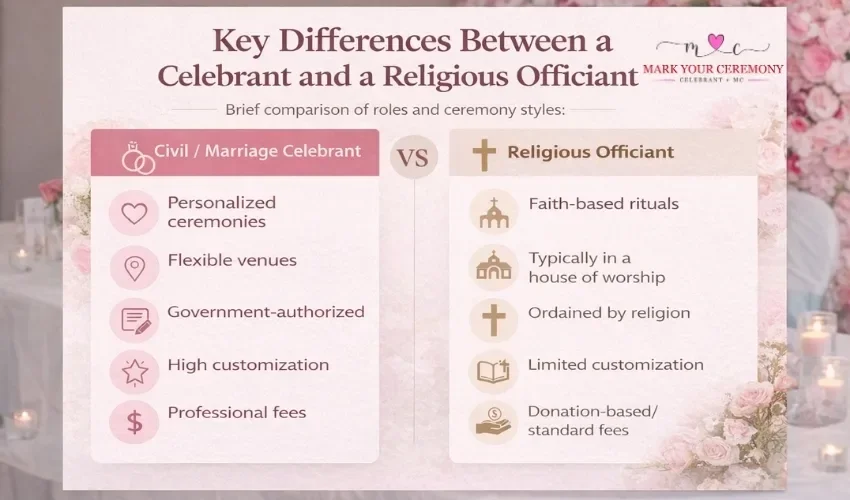
Here’s a quick comparison to clearly show how a civil marriage celebrant and a religious officiant differ in role, authority, and ceremony style:
| Feature | Civil / Marriage Celebrant | Religious Officiant |
|---|---|---|
| Primary Focus | Couple’s story, values, and wedding personalisation | Faith traditions, rituals, and spiritual meaning |
| Ceremony Script | Fully customised and co-created | Structured liturgy and prayers |
| Venue Flexibility | Any approved location (parks, homes, beaches) | Typically a house of worship |
| Affiliation | Government-authorised or independent | Religious organisation or denomination |
| Legal Authority | Can legally sign the marriage license | Ordained within a specific religion |
| Level of Customisation | High | Limited |
| Ongoing Role | Ceremony logistics and planning support | Pre-marital counseling and spiritual guidance |
| Cost / Fees | Fixed or customisable professional fees | Often donation-based or a standard fee |
This comparison highlights how the choice between a celebrant and a religious officiant depends on whether a couple prioritises creative flexibility and personal storytelling or faith-based tradition and spiritual guidance.
After this difference, you might also be confused about civil vs. religious wedding ceremonies in Australia. You can know their difference and plan your wedding according to your taste.
How to Choose Between a Celebrant and a Religious Officiant?
Choosing between a celebrant and a religious officiant affects how your wedding ceremony feels, looks, and reflects your values. The right choice depends on whether you want a faith-based ceremony or a more personal, secular celebration.
What to Think About
Do you want a religious ceremony, a secular or humanist ceremony?
How much personalisation do you want in your wedding ceremony?
Where do you want to get married, a house of worship or an outdoor/private venue?
Do you want pre-marital counselling or ongoing spiritual guidance?
Thinking about these points will help you choose the officiant that fits your wedding vision.
Questions to Ask Yourself Before Choosing
Is faith an important part of your wedding ceremony?
Do you want a fully custom ceremony script or a traditional format?
What location feels right for your wedding day?
Will you want religious or pastoral support after the wedding?
Which Officiant Is Right for You?
Celebrant: Best for interfaith, secular, or highly personalised weddings, especially at beaches, parks, or private homes.
Religious Officiant: Best for couples who want a traditional, faith-based ceremony that follows religious rituals and teachings.
By answering these simple questions, you can confidently choose the officiant who best matches your beliefs, venue, and wedding style.
Recommended Read: 10 Essential Questions to Ask a Celebrant Before You Book
Common Misconceptions About Celebrants and Officiants
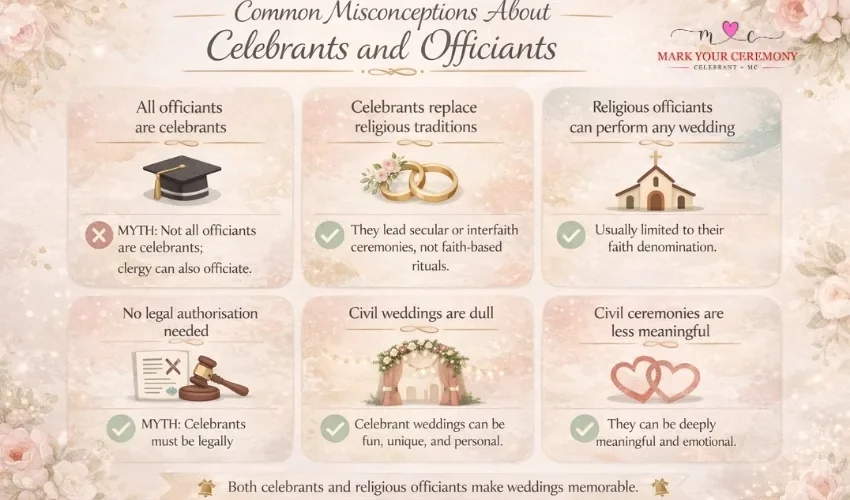
There are many myths about celebrants and religious officiants. Here are some of the most common, with the facts:
“All officiants are celebrants.”
Fact: All celebrants are officiants, but not all officiants are celebrants. Religious clergy also serve as officiants.“Celebrants can replace religious traditions.”
Fact: Celebrants create secular or interfaith ceremonies and do not perform faith-based rituals. Religious weddings require a recognised religious officiant.“Religious officiants can perform any wedding.”
Fact: Their authority is tied to their faith. They usually cannot marry couples outside their denomination without special permission.“You don’t need legal authorisation if you hire a celebrant.”
Fact: Celebrants must be legally registered to sign the marriage certificate and make the wedding official.“Civil or celebrant weddings are dull.”
Fact: Celebrant-led weddings can be fun, unique, and deeply personal, with custom vows, symbolic rituals, music, and even humour with fun-loving celebrants like Mark, from Mark Your Ceremony.“Civil ceremonies are less meaningful than religious ones.”
Fact: Celebrant weddings can be profoundly meaningful, focusing on storytelling, personal rituals, and emotional connection.
This clears up the confusion and shows that both types of officiants serve important, but different, roles in creating a memorable wedding.
Final Thoughts
Your wedding day should reflect your values, personalities, and the story you share as a couple. Consider how much ceremony personalisation you want, whether you prefer a flexible venue like a beach, park, or private home, and if a faith-based or secular ceremony best suits you.
It’s also important that your officiant has the proper legal authority to sign your marriage licence. For couples who want a celebrant who is fun, chill, and makes the ceremony truly memorable, you can create a personalised, relaxed, and joyful wedding experience that highlights your love story.
Contact Mark Your Ceremony today to start planning the celebration you’ve always dreamed of!
Frequently Asked Questions
-
A civil marriage celebrant focuses on personalised, secular, humanist, or interfaith ceremonies, creating a ceremony script that reflects the couple’s story and values. A religious officiant, such as a priest, minister, rabbi, or imam, conducts faith-based ceremonies following established rituals and liturgy.
-
DescriYes. A government-authorised celebrant has the legal authority to officiate weddings for couples of any faith or no faith, signing the marriage licence to make the union official.
ption text goes here -
Typically no. A religious officiant’s authority is tied to their religious organisation or denomination, so they cannot legally perform secular or humanist ceremonies without special permission.
-
Celebrants offer greater flexibility. They can customise the ceremony script, vows, rituals, and music, making your wedding unique and reflective of your personalities.
-
Only religious officiants need ordination within their faith. Celebrants require government authorisation or certification, but no religious ordination.
-
Yes. Celebrants can officiate weddings anywhere, including beaches, parks, private homes, or other non-traditional venues.
-
Yes. Pre-marital counselling is often part of a religious officiant’s role, offering guidance on faith-based rituals, vows, and spiritual preparation.
-
Yes. Some couples choose to have both a celebrant and religious officiant collaborate, blending secular elements with faith-based rituals for a unique, inclusive ceremony.
-
No. Celebrants primarily focus on secular, humanist, or interfaith customs, unless the couple specifically requests the inclusion of religious rituals.
-
Celebrants usually charge a fixed or customisable fee depending on the level of ceremony personalisation. Religious officiants may request donations or follow standard fees set by their religious institution.
-
Yes. An officiant is any individual legally authorised to marry couples, including civil marriage celebrants and members of the clergy.