

Outdoor Wedding Ceremony Checklist Australia: The Complete 2026/27 Planning Guide
An outdoor wedding ceremony in Australia needs more than a beautiful backdrop. You also need the right legal paperwork, permission to use your location, and a clear plan for heat, rain, wind and fire danger. Without walls, a roof or built-in power, small details like shade, seating and sound can quickly become big problems.
This outdoor wedding ceremony checklist Australia couples can rely on covers everything from lodging your notice of marriage to the final walk-through on the day. Use it to stay organised, keep your celebrant, venue and suppliers on the same page, and enjoy your ceremony with confidence.
Outdoor Wedding Ceremony Checklist Australia at a Glance
Legal first: Choose a registered marriage celebrant and lodge your Notice of Intended Marriage (NOIM) at least 1 month and no more than 18 months before the ceremony.
Location approval: Public parks, beaches and national parks usually need a council or park permit. Private venues and properties still need written confirmation of what is allowed.
Weather plan: Book a wet-weather option and a heat plan (shade, water, fans) before you pay deposits. Check fire danger ratings in summer.
Layout and comfort: Place seating so guests are not facing the sun, keep a clear accessible path, and confirm toilets, parking and power.
Sound: Use a battery-powered PA with a wireless microphone for your celebrant, and test it at the exact spot where you will stand.
Hire and vendors: Confirm delivery, setup and pack-down times in writing for chairs, arbour, marquee and any other hire items.
Budget buffer: Keep roughly 10% of your budget for last-minute costs such as extra shade, generators or a date or time change.
Why You Need an Outdoor Wedding Ceremony Checklist in Australia?
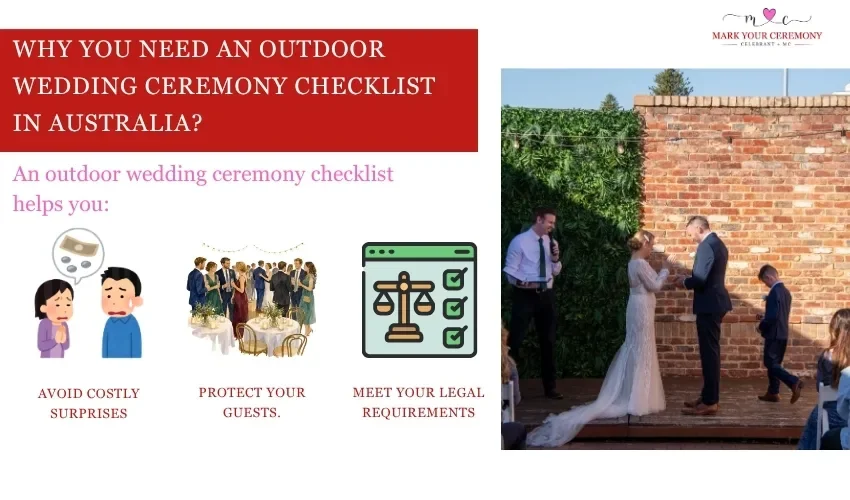
Outdoor and indoor weddings work very differently. Indoor venues come with a roof, power, toilets and a backup room. Outdoors, you are responsible for all of it. A checklist helps you:
Avoid costly surprises. Missing permits, insurance or power access can force last-minute changes to your ceremony.
Protect your guests. Australian sun, heat, wind and bushfire season are safety factors, not just comfort issues.
Meet your legal requirements. The rules for a legal marriage in Australia are the same wherever you hold the ceremony, and they must be met in full.
Keep every supplier on the same page. Your celebrant, venue, hire company, photographer and musicians all need the same timeline and setup details.
This guide is general information. Rules vary by state, territory and local council, so always confirm requirements with your celebrant, council or venue before you commit.
Not sure where to start with your outdoor ceremony? Our ceremony packages make it easy to choose.
Outdoor Wedding Ceremony Checklist Australia: Step-by-Step
Work through this outdoor wedding ceremony checklist Australia couples can use from the first booking to the day itself. Each section covers one area of your ceremony, so you can tick items off as you go and spot gaps early. Rules and fees differ by state, territory and council, so confirm the details for your location.
Celebrant and Legal Paperwork
Registered marriage celebrant booked (check the Australian Government Register of Marriage Celebrants)
Fees, travel costs and inclusions confirmed in writing, along with the celebrant’s experience with outdoor and wet-weather ceremonies
Notice of Intended Marriage (NOIM) lodged at least 1 month and no more than 18 months before the wedding
Photo ID and proof of date and place of birth ready for both partners (plus proof of how any previous marriage ended)
Both partners and both witnesses confirmed as aged 18 or over
Legal wording and vows reviewed with your celebrant
See the full list of legal documents required for marriage in Australia before you lodge your NOIM.
Location, Permit and Insurance
Ceremony site chosen and booked in writing
Council booking or ceremony permit confirmed for parks, gardens and beaches, or a parks authority permit for national parks and reserves
Private venue rules checked: outside suppliers, power, toilets, access and wet-weather space
Public liability insurance requirements checked with the council or venue
Alcohol, noise, amplified sound and drone rules checked
Wedding or cancellation insurance considered (read the weather exclusions)
Date, Time and Weather Backup Plan
Ceremony time set to avoid peak midday heat and UV, with sunset time checked so portraits finish in good light
Wet-weather option booked: marquee, covered pavilion or indoor room, with capacity confirmed for ceremony seating
Heat and wind plans ready: shade, cold water, hand fans, weighted signage and an anchored arbour
Fire danger rating and any Total Fire Ban checked for bushfire-prone areas, with no candles, sparklers or open flames if banned
Decision deadline agreed with celebrant, venue and hire company (for example, 48 hours out), plus a way to notify guests of any change
The Bureau of Meteorology forecast and state fire or emergency warnings checked daily in the final week
Seating Layout and Outdoor Wedding Hire
Guests positioned so they are not facing direct sun, on flat, firm ground or with matting added for soft grass and sand
Aisle wide enough for the bridal party, wheelchairs and prams, with front rows reserved for family and guests with mobility needs
Ceremony chairs hired plus a few spares, along with an arbour or backdrop with anchoring and a sheltered signing table
Marquee or shade structure hired, with wet-weather walls if needed
Generator, lighting and portable toilets hired if the site has none or too few
Delivery, setup and pack-down times, and the wet-weather change policy, confirmed in writing
Sound System
Wireless lapel or headset microphone arranged for the celebrant
Handheld microphone ready for readings
Speakers placed to cover all seating without feedback
Battery-powered PA, or a safe power source with extension leads
Microphone windscreens and spare batteries packed
Sound tested at the exact spot where the couple will stand, and council or venue limits on amplified sound confirmed
Guest Comfort and Access
Shade, cold water and sunscreen available for guests
Invitation note asking guests to bring a hat and sunscreen and to wear suitable footwear
Fans or cooling towels for hot days, and blankets or approved heaters for cooler months
Insect repellent available, with seasonal hazards checked, such as bees, snakes or nesting birds in spring
Parking, drop-off points or shuttles confirmed, with clear directions and mobile reception tested
Step-free access, a firm path and enough toilets for your guest count and ceremony length
Outdoor Wedding Ceremony Ideas and Details
Vows kept short, since wind and sound can make long readings hard to hear
Readings, music and any cultural or family traditions chosen
Acknowledgement of Country included, if you want it
Ring bearer or ring keeper chosen
Decor kept simple so the natural backdrop does the work, with florals chosen for wind and heat
Outdoor-friendly unity rituals considered (handfasting, sand pouring or tree planting), and items banned by the site (confetti, balloons, open flames) left out
Suppliers, Budget and Day-Of Essentials
Same timeline, access routes and weather plan shared with every supplier, with one trusted person named as the point of contact
Photographer briefed on sun direction, timeline and family photo list
Wet-weather and extreme-heat policies confirmed with each supplier
Budget set for all ceremony costs, with a contingency of around 10% set aside
Final guest numbers and supplier arrival times reconfirmed, and a rehearsal or walk-through done with the celebrant
Emergency kit packed, printed copies of permits and contacts ready, and the celebrant’s paperwork and both witnesses confirmed on the day
Feeling overwhelmed by the checklist? You don’t have to do it alone. Contact Mark Your Ceremony and let a Perth celebrant handle the legal side while you enjoy planning the rest.
Outdoor Wedding Ceremony Order of Events (Sample Timeline)
There is no single required structure, but most Australian outdoor ceremonies follow a similar flow. This sample runs about 20 to 30 minutes, which suits outdoor conditions well. Your celebrant will adjust it to your needs.
Guest arrival and seating (20 to 30 minutes before): Soft music plays while guests find seats. Offer water and shade.
Processional: The wedding party and partners walk down the aisle in the order you and your celebrant choose.
Welcome and acknowledgement of country: The celebrant welcomes guests and, if you choose, acknowledges the traditional custodians of the land.
Introduction and the nature of marriage: The celebrant introduces the ceremony and includes the legal statement required by the Marriage Act.
Reading or family moment (optional): A friend or family member shares a reading or blessing.
Legal vows and personal vows: The couple makes the legal declaration, followed by optional personal vows. Keep these short for outdoor sound.
Ring exchange: The couple exchanges rings.
Pronouncement and kiss: The celebrant announces the couple as married.
Signing of the marriage documents: The couple, celebrant and two witnesses sign while music or a short musical piece plays.
Recessional and photos: The couple walks back up the aisle, and guests head to shade or refreshments while portraits are taken.
A good structure for an outdoor wedding ceremony is short, clearly heard and shaded, with the legal steps built in. Aim for 20 to 30 minutes so guests stay comfortable in the sun or wind.
Final Thoughts
A great outdoor wedding ceremony comes down to good planning, not luck. Get your celebrant and paperwork sorted early, confirm your location and permit, plan for heat, rain, wind and fire danger, and test your sound where you will stand.
Work through this outdoor wedding ceremony checklist Australia couples can follow at their own pace, and you will reduce stress and leave room to enjoy the day. Always confirm current rules with your celebrant, local council or venue, since requirements can change by location.
Planning an outdoor wedding in Perth or Western Australia? Mark Your Ceremony can guide your outdoor ceremony, handle the legal paperwork and keep the day running smoothly.
Frequently Asked Questions
-
A good structure is short and easy to follow: arrival and seating, processional, welcome, legal statement, vows, ring exchange, pronouncement, signing and recessional. Aim for 20 to 30 minutes so guests stay comfortable, and let your celebrant include the required legal wording.
-
Include your celebrant, Notice of Intended Marriage, location permit, insurance, weather backup plan, seating and hire, sound system, guest comfort items, suppliers and budget. The outdoor wedding planning checklist above covers all of these.
-
Budget for celebrant fees, venue or permit costs, hire, sound, florals, photography, attire, rings, insurance and guest comfort items. Add a contingency of around 10%, and collect quotes early since costs vary by location and guest numbers.
-
There are no legal or formal duties for the groom’s mother in Australia. Traditionally she supports the couple and helps with family coordination, but her role is whatever the couple and family agree on.
-
Often, yes. Council parks and beaches usually need a booking or permit, and national parks typically need a special permit. Private venues may not, but they have their own rules, so check with the council, park authority or venue early.
-
Lodge it with your celebrant at least 1 month and no more than 18 months before the wedding. Lodging early leaves time to fix any document issues.
-
Yes. Heat, wind, rain and fire danger can all affect your ceremony. Book a wet-weather option, plan shade and water for hot days, and agree on a decision deadline with your celebrant, venue and hire company.
-
Most ceremonies need a PA system with a wireless microphone for the celebrant, plus speakers for music. Choose battery or powered based on site access, test it where you will stand, and keep spare batteries ready.