

How to Elope in Australia: A Complete Legal Guide (2026)
Eloping doesn't mean what it used to. It's not about sneaking off in the middle of the night without telling anyone. These days, eloping in Australia usually just means keeping things small: a couple, a celebrant, two witnesses, and a location that actually means something to you, instead of a 150-person reception you spent a year (and a small fortune) planning.
Here's the good news: eloping in Australia is completely legal, and honestly, it's a lot more straightforward than most people expect. There are still legal boxes to tick; this is still a legally binding marriage, after all. But once you understand the process, it's genuinely simple to plan.
In this guide, we'll walk through exactly how to elope in Australia: the legal requirements, the paperwork, how much it actually costs, where couples are eloping right now, and how it all compares to a traditional wedding or a micro wedding.
Quick answer:
To elope in Australia, you need to lodge a Notice of Intended Marriage (NOIM) with a registered celebrant at least one calendar month before your ceremony, gather your ID and any divorce or death certificates, and arrange two witnesses over 18. From there, you can legally marry almost anywhere in the country, from a Perth backyard to a Blue Mountains lookout. A basic elopement can cost under $1,000, and the whole process is exactly as legally binding as a traditional wedding.
Can You Elope in Australia?
Yes, and it's legally recognised the same way any traditional wedding is, as long as you follow the legal process. Eloping in Australia basically just means having a small, private wedding ceremony, usually with just the two of you plus your required witnesses, instead of a big guest list and all the trimmings.
It's a bit different from the old "running away to get married" idea. You don't need to hide it from anyone, and you don't need to go interstate or overseas to make it official. You can elope in your own backyard in Perth, on a beach in the Whitsundays, or on a cliff top in Tasmania, and it's exactly as legal as a wedding with 200 guests.
That said, "small and simple" doesn't mean "no planning required." Australia still has legal timelines and documentation you need to sort out in advance, so a little planning ahead is non-negotiable, even for the most low-key elopement.
Ready to make it official without the fuss? Our Cozy Elope package covers the whole legal process, from the paperwork to the certificate, so it's ready when you are.
Legal Requirements to Elope in Australia
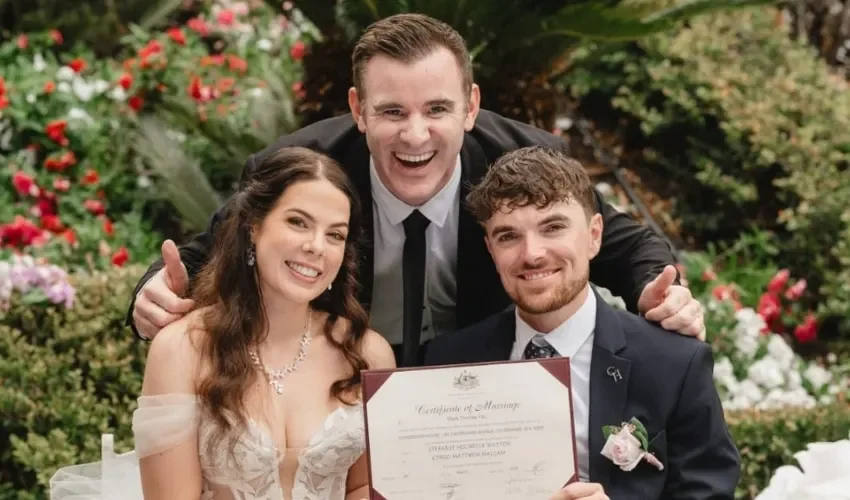
Eloping might be smaller and simpler than a traditional wedding, but legally, it's treated exactly the same. So it's worth knowing the ground rules before you start picking celebrants and dream locations. The same requirements apply, just without the big guest list attached.
Who Can Legally Get Married?
Before you even start thinking about locations and celebrants, it helps to know the basic eligibility rules. To legally marry in Australia, both people need to do the following:
According to Section 11 of the Marriage Act 1961, the marriageable age is 18; however, under Section 12, a person aged 16 or 17 can marry with a judge's or magistrate's court approval and parental consent, provided they are marrying an adult, as two people under 18 can never marry each other.
Freely and knowingly consent to the marriage
Not already be legally married to someone else, in Australia or overseas
Not be closely related (parent, grandparent, sibling or child)
These rules apply no matter how big or small your ceremony is.
Marriage Laws You Need to Know
Marriage in Australia is governed by the Marriage Act 1961, and it's exactly the same across every state and territory. So whether you're eloping in the Blue Mountains, Perth, or Byron Bay, the legal process doesn't change; only the scenery does.
A lot of couples also walk in with a few common misconceptions about legal wedding ceremonies in Australia, like thinking you need a marriage licence or that a friend can legally officiate.
Step-by-Step Guide to Eloping in Australia
Once you've got your head around the legal basics, the actual process is pretty simple; it just comes down to five steps. Here's exactly what needs to happen, in the order it needs to happen.
Step 1: Lodge Your Notice of Intended Marriage (NOIM)
This is the part people always ask about first, and it genuinely trips a lot of couples up.
The NOIM is a legal form that tells the government (and your celebrant) that you're planning to marry. You need to lodge it with your registered celebrant at least one calendar month before your wedding date is not 28 days, not "a month and a bit", but exactly one calendar month, as set out in the Marriage Act.
A few things worth knowing:
You can lodge your NOIM up to 18 months before the big day, so there's no harm getting it sorted early
If you're overseas, you can sign the NOIM in front of an authorised person like an Australian consular officer or a notary public
In rare, specific circumstances, a prescribed authority can approve a shortened notice period but this isn't automatic and isn't something to rely on if you're planning a quick elopement
Basically, if there's one deadline you build your whole elopement timeline around, it's this one.
Recommended Read: Step-by-Step Guide to Submitting Your NOIM in WA
Step 2: Prepare Your Documents
Once your NOIM is in, you'll need to give your celebrant proof of identity and, if relevant, proof that any previous marriage has legally ended. The usual documents needed to elope in Australia are:
Birth certificate or passport (to confirm date and place of birth)
Photo ID
Divorce certificate or death certificate, if either of you has been married before
If getting an official birth certificate is genuinely impossible, a statutory declaration can sometimes be used instead; your celebrant can talk you through that.
Recommended Read: Legal Documents Required For Marriage in Australia
Step 3: Choose a Registered Marriage Celebrant
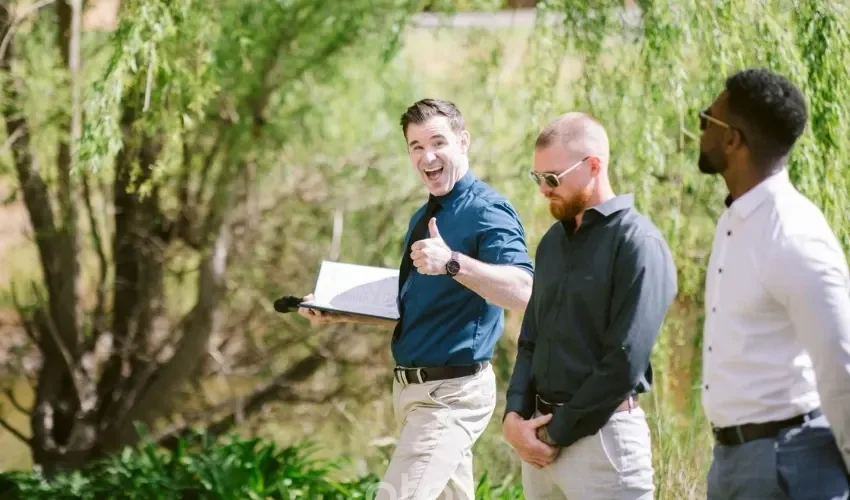
You can't elope without a celebrant in Australia; this is one of the few non-negotiables. Every legal marriage needs to be conducted by a registered celebrant, whether that's a civil celebrant or a religious one.
Finding a celebrant to elope with is actually easier than a lot of couples expect. Look for someone who's genuinely registered (you can check this on the attorney general's department register) and ideally someone who's actually experienced with small, intimate ceremonies, not just standard big-day weddings squeezed into a shorter time slot. An elopement has a different rhythm to it, and a celebrant who understands that makes a real difference.
Still narrowing down who to book? Choosing the right marriage celebrant in Perth comes down to a few key things worth checking before you commit.
Step 4: Arrange Your Witnesses
You do need witnesses to elope in Australia; no way around this one. Specifically, you need two witnesses, both over 18, to sign the marriage documents alongside you and your celebrant.
They don't need to be family. Friends work fine, and if nobody you know is around, some celebrants can arrange witnesses for you, or you can use two staff members from your ceremony venue. So really, the minimum number of people you need to elope in Australia is just four: you two, plus two witnesses.
Recommended Read: How Many Witnesses You Need For a Wedding in Australia
Step 5: Your Wedding Day
On the day, the ceremony itself is fairly simple. Your celebrant will say the legal words required under the Marriage Act; you'll exchange vows and rings if you're having them, and then everyone signs the marriage documents: you, your partner, the celebrant, and your two witnesses.
After that, your celebrant lodges the paperwork with the relevant state or territory registry, and your marriage is officially registered.
How Long Does It Take to Elope in Australia?
The absolute legal minimum is one calendar month, purely because of the NOIM waiting period we covered in Step 1. That's the fastest it can legally happen.
For a realistic, stress-free timeline though, most couples give themselves somewhere between six weeks and a few months. This gives you time to:
Lock in your celebrant and location
Book a photographer, if you want one
Sort flights or accommodation if you're travelling to your elopement spot
Get your documents together without any last-minute panic
Your official marriage certificate (different from the on-the-day marriage document) comes later, usually a few weeks after your celebrant lodges the paperwork with the registry. You'll need to apply for it separately through your state or territory's Births, Deaths and Marriages office.
Recommended Read: How Long Does a Wedding Ceremony Typically Last in Australia?
Where Can You Elope in Australia?
You can elope almost anywhere in Australia: a beach, a winery, a national park, or your own backyard as long as your celebrant agrees to the location and the ceremony meets legal requirements. It's genuinely that open.
New South Wales
Blue Mountains cliff edges, waterfalls, and misty lookouts make this one of the best places to elope in the Blue Mountains and genuinely one of the most popular elopement destinations in the country
Sydney beaches' sunrise ceremonies with the harbour or coastline as your backdrop
Hunter Valley vineyards and rolling hills if you want something a bit more relaxed
Victoria
Yarra Valley: Wineries and countryside views
Great Ocean Road: Dramatic coastal scenery, especially near the Twelve Apostles
Melbourne gardens: Botanic gardens and parks for an easy, low-fuss city elopement
Queensland
Whitsundays: White sand and turquoise water, about as classic a destination elopement as you can get
Gold Coast: Beaches with easy access to accommodation and vendors
Sunshine Coast: A quieter, more laid-back coastal option
Western Australia
Perth: Parks, riverside spots, and city rooftops, plus the practical advantage of easy access to celebrants and vendors
Swan Valley: Wineries just outside the city
Margaret River: Forests, coastline, and vineyards all within reach of each other
Fremantle: Heritage streets and harbourside charm
Tasmania
Freycinet National Park: Pink granite peaks and Wineglass Bay
Cradle Mountain: Dramatic, wild scenery for couples who want something rugged
Bay of Fires: Orange lichen-covered rocks against white sand and blue water
Eloping somewhere around Perth? Mark Your Ceremony can help you bring your dream location to life, wherever in WA you choose to say "I do".
How Much Does It Cost to Elope in Australia?
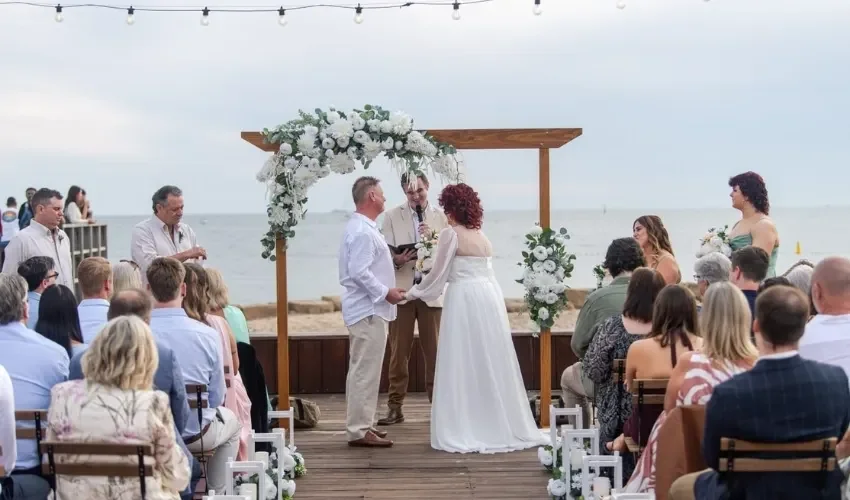
This is genuinely one of the biggest reasons couples choose to elope, so let's be honest about it.
A basic elopement celebrant, a simple ceremony, and the legal paperwork sorted can realistically be done for under $1,000. Our Cozy Elope package, for example, is $900 flat for up to 30 guests, and that covers the celebrant, a custom ceremony script, music, all the legal paperwork, and your official marriage certificate. No hidden extras, no surprise add-ons.
On the other end, a bigger destination elopement with styling, a photographer and videographer, and travel for you and your witnesses can run into the tens of thousands, though even then, it's usually still cheaper than a full traditional wedding.
Factors that affect price include:
Whether you're hiring a photographer or videographer
Travel and accommodation, especially for destination spots like the Whitsundays or Tasmania
Flowers, styling, and any hair and makeup
Celebrant fees, which vary depending on experience, location, and what's included in the package
Is it Cheaper to Elope Than to Have a Wedding in Australia?
Yes. Traditional weddings in Australia frequently cost tens of thousands of dollars once you factor in venue hire, catering for a full guest list, and all the vendors that come with a bigger day. Eloping strips a lot of that away. A $900 flat-fee package covers what a traditional wedding might spend on flowers alone.
Elopement vs Traditional Wedding
Once you know an elopement is legally identical to a big wedding, the next question is usually about the feel of the day. Here's where the real differences actually show up.
What Makes an Elopement Different?
Elopement vs a Micro Wedding
People often lump these together, but they're not quite the same thing. In practice, the line is blurry, and the terms overlap a fair bit, but generally, a micro wedding leans towards the higher end of a small guest list (think closer to 20 to 30 people), while an elopement can range from just the couple up to a similar small group, with more focus on simplicity than scale.
Which suits you depends on what you actually want:
Want close family and friends there, without the scale of a full wedding? A micro wedding is probably the better fit.
Want the day to be just about the two of you? An elopement is the way to go.
Planning a micro wedding with a reception to follow? Our MC services can keep the whole day running smoothly, from ceremony through to celebration.
Can Foreigners Elope in Australia?
Yes, tourists can legally marry in Australia. You don't need to be an Australian citizen or permanent resident to get married here, and there's no residency requirement.
Overseas couples still need to follow the same process as everyone else: lodge a NOIM with a registered celebrant at least one calendar month before the ceremony and provide the same identity documents (passport and evidence of any previous marriage ending, if applicable).
As for whether an Australian marriage is recognised overseas generally, yes. Most countries recognise marriages legally performed in Australia, but it's always worth double-checking the specific requirements of the country you're planning to live in or travel to as a married couple.
Planning Checklist for Your Australian Elopement
Here's the whole process in one place, if you just want the short version.
Choose your wedding date
Select your location
Book a registered celebrant
Lodge your NOIM (at least one calendar month before your date)
Gather your documents (ID, birth certificate, divorce or death certificate if needed)
Arrange your two witnesses
Book photography and any other vendors
Enjoy your ceremony
Final Thoughts
At the end of the day, eloping in Australia isn't complicated; it just needs a bit of forward planning. Once your NOIM is lodged and your documents are sorted, most of what's left is the fun part: picking a location that actually feels like you and choosing a celebrant you're comfortable with.
The legal side is honestly the easy part once you know what's coming. What actually makes an elopement special isn't the paperwork; it's choosing to keep your day about the two of you, in a place that means something, without worrying about seating charts or a guest list. That's really the whole point of eloping in the first place.
Got questions about your own elopement? Get in touch and we'll help you sort out the details, big or small.
Frequently Asked Questions
-
No. Every legal marriage in Australia, no matter how small, has to be conducted by a registered marriage celebrant.
-
Yes, you need two witnesses over the age of 18 to sign the marriage documents.
-
18, with rare exceptions for 16- and 17-year-olds who have court approval and parental consent. Two people under 18 can never marry each other.
-
Yes. you can get married in Australia on a tourist visa. There's no residency or citizenship requirement to marry in Australia.
-
Yes, as long as they meet the same legal requirements as everyone else, including lodging a NOIM and providing identity documents.
-
Yes, though it's worth checking that the marriage is properly recognised both in the country you marry in and back in Australia.
-
Yes, as long as your celebrant agrees to the location and the legal requirements of the ceremony are met, you can marry almost anywhere.
-
It varies widely, from a few thousand dollars for a simple ceremony to well into five figures for a styled destination elopement, but it's almost always cheaper than a traditional wedding.
-
At minimum, one calendar month, due to the NOIM waiting period. Most couples plan for six weeks to a few months to be safe.
-
No. Legally, it's exactly the same process and the same marriage; the only difference is the size and style of the day.