
What Are Common Misconceptions About Legal Wedding Ceremonies in Australia?
So you're planning a wedding, and somewhere between choosing a venue and arguing about the guest list, you've probably come across a few "facts" about legal wedding ceremonies in Australia that aren't actually true.
Honestly, this happens to almost every couple. Between movies, overseas wedding traditions, and well-meaning advice from relatives, it's easy to end up with a completely wrong picture of what actually makes a marriage legal here. The most common misconceptions usually involve who's legally allowed to officiate, how far in advance you need to file your paperwork, whether your vows need to be memorised, and whether religion or a formal licence is required at all, and the truth is simpler than most people expect.
Quick Answer:
Many couples misunderstand Australia's marriage laws because they rely on overseas traditions or movie portrayals. A legal wedding in Australia does not require saying "I do," a religious ceremony, memorised vows, or a wedding licence. Instead, couples must submit a Notice of Intended Marriage (NOIM) at least one month before the ceremony, be married by an authorised celebrant, use the required legal wording, have two witnesses over 18, and sign the official marriage documents. Understanding these legal requirements helps ensure a valid and stress-free wedding ceremony.
Why Misconceptions Are So Common in Wedding Ceremonies in Australia?
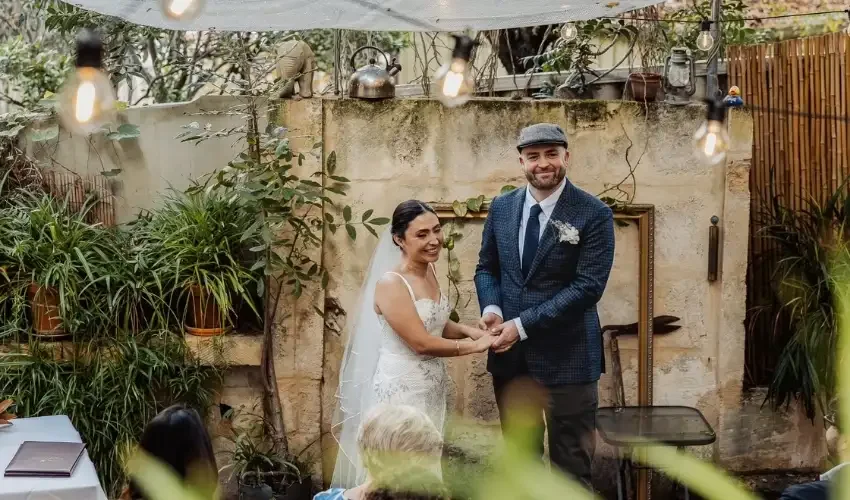
Misconceptions around legal wedding ceremonies in Australia are so common because most people base their expectations on American movies, Pinterest boards, or a friend's wedding overseas, not on actual Australian law.
The problem is, marriage laws aren't the same everywhere. What's true in the US or UK isn't necessarily true here, and the legal requirements for marriage in Australia come from a specific set of rules under the Marriage Act 1961 that don't always match what people expect.
A lot of couples also only start looking into the legal side once they're already deep into venue bookings and dress shopping, by which point they've absorbed a bunch of wrong assumptions without realising it.
So before you lock anything in, it's worth going through the misconceptions that come up the most and what's actually true instead.
Recommended Read: What Is the 30/5-Minute Rule for Weddings?
Top 7 Common Misconceptions About Legal Wedding Ceremonies in Australia
The most common misconceptions about legal wedding ceremonies in Australia usually come down to a few things: who can officiate, how far in advance you need to file paperwork, and what actually needs to be said or written during the ceremony. Here's where couples get it wrong most often.
1. Saying "I Do" Is What Makes It Official
This one trips up almost everyone, mostly because it's such a huge part of wedding culture on TV and in movies.
Truth is, "I do" is just tradition. It's not a legal requirement, and skipping it wouldn't make your marriage any less valid.
What actually makes it legal is a specific set of words set out under the Marriage Act 1961. Both of you have to say something along the lines of calling on the people present to witness that you take your partner as your lawful wedded spouse, using your full legal names. That exact wording (or something very close to it) is non-negotiable. "I do" can still be part of the ceremony if you want it; it's just not doing the legal heavy lifting people assume it is.
Not sure who can be your wedding witnesses? Read our complete guide before your big day: How Many Witnesses Do You Need for a Wedding in Australia?
2. You Can Get Married the Same Day You Decide To
If you're picturing a spontaneous courthouse wedding like you'd see in the US, Australia doesn't really work that way.
Before any legal ceremony can happen, you need to lodge a Notice of Intended Marriage (NOIM) with your celebrant. And here's the part that catches people out: it has to be submitted at least one calendar month before your wedding date. Not a rough guideline, an actual legal minimum.
There are exceptions for genuinely urgent situations, but those need to be approved by an authorised person, not just requested because you're excited or in a hurry. So if you're planning to get married in Australia, the NOIM is one of the very first things to sort out, well before you're picking flowers or seating charts.
3. Any Friend or Family Member Can Officiate
This misconception has grown a lot, mostly because of online "ordination" services that make it seem like anyone can legally marry a couple with a few clicks.
In Australia, that's not how it works. To legally solemnise a marriage, the person has to be a registered marriage celebrant, an authorised religious minister, or a state official through a registry. This is one of the core marriage celebrant requirements Australia has in place, and it's not really flexible.
Now, that doesn't mean your favourite aunt or your best mate can't be involved. Plenty of couples have a loved one read something meaningful, hand over rings, or even help "run" parts of the ceremony. They just can't be the one legally marrying you unless they're on the Marriage Celebrants Register. If having a friend front and centre matters to you, some couples do a symbolic ceremony led by the friend, then handle the legal side separately and quietly.
Recommended Read: Can a Friend Marry Us in Australia?
4. You're Not Allowed to Marry a Cousin
This surprises a lot of people, honestly. There's a common belief that cousin marriages are illegal in Australia, lumped in with more serious restrictions.
They're not. Australian law only prohibits marriage between direct family lines, meaning parents, children, grandparents, and siblings (this includes half-siblings and adopted relationships too). Cousins fall outside that restriction entirely.
It's rarely relevant for most couples, but it's one of those myths that gets repeated so often people just assume it's fact.
5. A Legal Wedding Has to Be Religious
Some couples genuinely worry that without a church, a minister, or religious readings, their wedding won't feel "real" or won't count legally.
It absolutely counts. Legal requirements for marriage in Australia don't care whether your ceremony is religious, secular, spiritual, quirky, or somewhere in between. You could get married on a beach, in a backyard, or at a winery with zero mention of religion, and it's every bit as legal as a church wedding.
What matters legally is the paperwork and the wording, not the setting or the belief system behind it.
Still unsure about the difference between a celebrant and a religious officiant? Understanding what each one offers can help you choose the right person for your wedding ceremony.
6. You Have to Memorise Your Vows
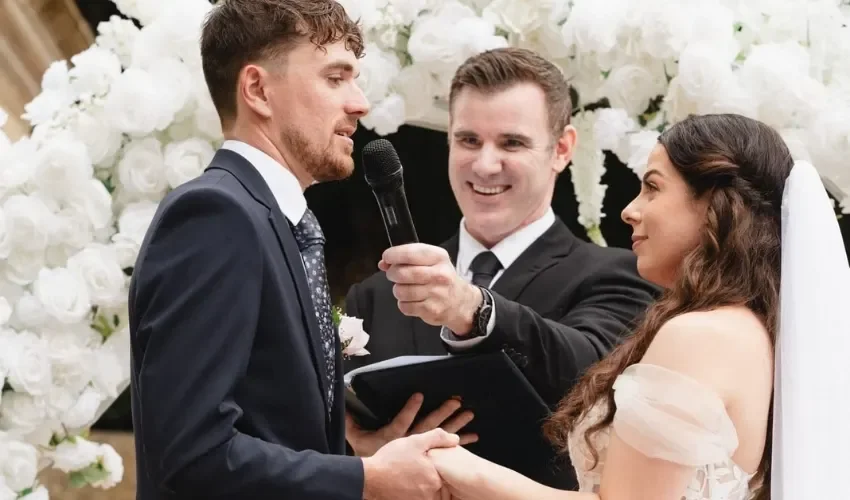
For a lot of people, this is genuinely the scariest part of the whole day, the idea of standing up in front of everyone and reciting vows from memory.
Good news: you don't have to. Reading from a card, a phone, or a little booklet your celebrant hands you is completely fine. There's no rule anywhere that says vows need to be memorised to be legitimate.
Also worth knowing, you're not required to write personal, heartfelt vows either. The only vows that are legally necessary are the short, standard ones required by law. Anything extra, the personal stories, the inside jokes, and the emotional speeches – that's all optional and entirely up to you.
Want your ceremony to feel even more personal? Read our guide to writing your own wedding vows and create promises that truly reflect your relationship.
7. You Need to Apply for a "Wedding Licence"
This one usually comes from couples who've watched a lot of American wedding content, where getting a marriage licence is a whole separate errand before the big day.
Australia doesn't have wedding licences. At all. Instead, the legal process runs through the NOIM, your celebrant, and signing the official marriage documents on the day itself. Once everything's signed and witnessed correctly; your celebrant lodges the paperwork, and you're issued a marriage certificate afterwards.
So if you've been searching for where to "apply for a licence", you can stop. That step just doesn't exist here.
Recommended Read: Can a Celebrant Legally Marry You in Australia?
Final Thoughts
At the end of the day, most of these misconceptions come from good places, wedding movies, cultural traditions from other countries, or just assuming things work the same everywhere. They don't, and that's honestly fine once you know the real rules.
The core of it isn't complicated. Lodge your NOIM a month ahead, use a properly registered celebrant, get the legal wording right, have two witnesses over 18, and sign your paperwork correctly. Everything else, the vows, the venue, and the personal touches – those are entirely yours to shape.
If you're not sure whether something about your ceremony fits within the legal requirements, it's always worth asking your celebrant directly before the day. They deal with this constantly, and a five-minute question early on can save a lot of stress later.
If you'd rather skip the guesswork entirely, Mark Your Ceremony can walk you through the legal side properly, from picking a registered celebrant to making sure your paperwork's sorted well before the big day.
FAQs
-
No. Only a registered marriage celebrant, an authorised religious minister, or a state registry official can legally solemnise a marriage in Australia. A friend or family member can be involved in the ceremony, but they can't be the one making it legal.
-
You need to lodge your NOIM at least one calendar month before your wedding date. Exceptions exist for urgent situations, but they require approval from an authorised person, not just a personal request.
-
No, Australia doesn't use marriage licences at all. The legal process runs through the NOIM, your celebrant, and signing the official marriage documents on the day itself.
-
Not unless they're a registered marriage celebrant. They can absolutely be part of your ceremony in other ways, but the legal solemnisation has to be done by someone on the Marriage Celebrants Register.
-
No. Legal requirements for marriage in Australia don't require any religious element at all. A secular, spiritual, or entirely non-religious ceremony is just as legally valid as a religious one.
-
No, reading your vows from a card, phone, or booklet is completely fine. There's no legal requirement to have them memorised, and writing personal vows beyond the legal wording is optional too.
-
Yes. Australian law only prohibits marriage between direct family lines, such as parents, children, grandparents, and siblings. Cousins fall outside that restriction entirely.
-
You need two witnesses, and both must be 18 or older. They need to be present and sign the marriage documents at the ceremony itself, not afterwards.