How to Find an LGBTQIA+ Friendly Wedding Celebrant in Australia?
The best way to find an LGBTQIA+ friendly wedding celebrant in Australia is to search dedicated LGBTQIA+ wedding directories, check reviews from same-sex couples they've married, and confirm they're registered as a general civil celebrant rather than a religious one. So you're engaged, and now you're staring down the slightly overwhelming task of finding a celebrant who's actually going to get you as a couple. Not just tolerate you. Not just tick a diversity box on their website. Actually get it.
If you've searched for how to find an LGBTQIA+ friendly wedding celebrant in Australia, you're probably already a bit tired of vague "love is love" website banners that don't really tell you anything about how a celebrant works. Fair enough. Your ceremony is one of the most personal moments of your life, and the person standing up the front with you matters more than most couples realise until the day actually arrives.
Here at Mark Your Ceremony, we're a Perth-based celebrant and MC service that performs LGBTQIA+ ceremonies regularly, not occasionally. This guide walks through what "inclusive" should actually mean, where to look, what questions to ask, and a bit about the legal side too, so you're not caught off guard.
Quick answer:
To find an LGBTQIA+ friendly wedding celebrant in Australia, look for one registered as a general civil celebrant, not a religious celebrant, since religious celebrants can legally decline to marry same-sex couples. Check LGBTQIA+ wedding directories, read Google reviews, and ask the celebrant directly about their experience marrying same-sex or LGBTQIA+ couples before you book.
What "LGBTQIA+ Friendly" Should Actually Mean?
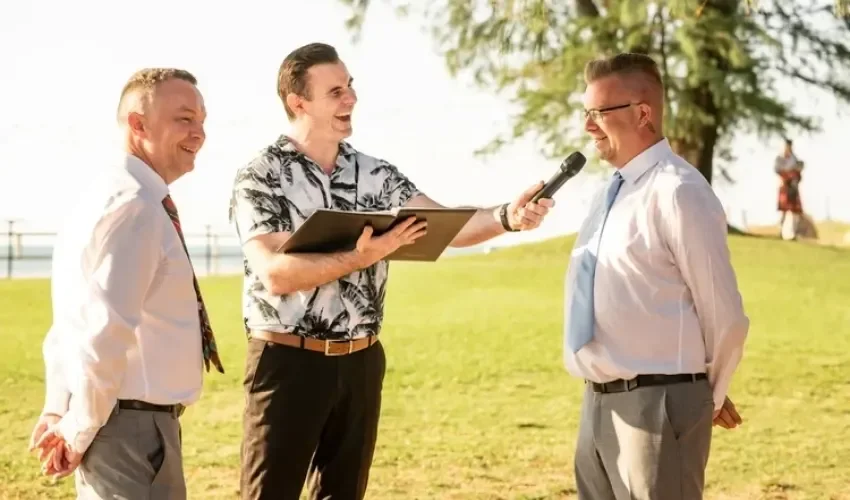
An LGBTQIA+ (lesbian, gay, bisexual, transgender, queer/questioning, intersex, and asexual) friendly wedding celebrant is one who has genuine experience marrying same-sex and gender-diverse couples, not just a stated willingness to. Honestly, a lot of celebrants slap a rainbow flag on their homepage and call it a day. That's not the same as being genuinely experienced with same-sex or non-traditional ceremonies.
A real, inclusive wedding celebrant Australia couples can trust will:
Ask about your pronouns before assuming anything, and use them correctly throughout the ceremony
Skip the traditional "who gives this woman away" style language unless you actually want it
Have officiated same-sex, queer, or gender-diverse weddings before, and be able to talk about it specifically rather than in vague generalities
Feel just as relaxed and confident with your ceremony as with anyone else's, because to them, it's not a novelty
Basically, the difference between "accepting" and "experienced" comes down to whether they've actually done the work, over and over, with real couples like you.
Where to Actually Look: LGBTQIA+ Wedding Directory Australia
Generic wedding directories are fine, but they don't always filter for celebrants who actually specialise in LGBTQIA+ ceremonies. A dedicated LGBTQIA+ wedding directory in Australia platform makes this a lot easier because the vendors listed there have usually opted in specifically to work with queer couples, rather than just being open to it if asked.
Dedicated LGBTQIA+ Wedding Directories
These are worth starting with because every vendor listed has actively chosen to be there. It's not a case of "we're fine with it if asked"; they've put themselves forward specifically to work with the community, which usually means more experience and less explaining on your part.
Google Reviews
Website testimonials can be cherry-picked; Google reviews are harder to control. Search a celebrant's name directly and read a handful of reviews, not just the star rating. Look for mentions of same-sex ceremonies specifically, not just generic praise.
Instagram and Facebook
Social media is one of the fastest ways to get a real feel for how a celebrant works. Look for actual ceremony photos, not just posed portraits, and see whether same-sex couples show up naturally in their portfolio rather than as a one-off feature post.
Word of Mouth
Honestly, this one's underrated. Ask other LGBTQIA+ couples who've recently married in Australia who they used and how it went. A personal recommendation from someone with the exact same concerns as you is hard to beat.
Don't just stop at the first name you find either. Spend a bit of time comparing a few celebrants before you commit, because this is a decision you'll want to feel genuinely good about. If you're getting married in Perth or WA, we'd love to be on your shortlist, but wherever you land, make sure it's someone who feels right.
Not sure where to start your own search? Skip the guesswork and see how I approach same-sex and LGBTQIA+ weddings in Perth: real ceremonies, real experience, no explaining required.
Why LGBTQIA+ Couples Need a Celebrant With Real Experience
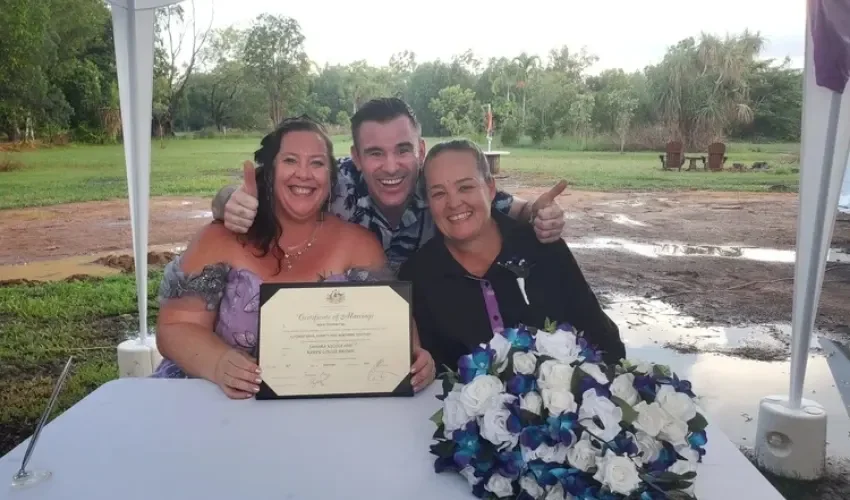
At the end of the day, a celebrant isn't just reading a script. They're setting the tone for the whole day. For a lot of LGBTQIA+ couples, getting married still carries extra weight, maybe it's the first same-sex wedding in your family, or maybe you waited years for the law to change before you even had this option. Whatever your story is, experience shows up in small moments, and couples notice when it's missing:
Fumbling your pronouns or defaulting to heteronormative language out of habit
Seeming visibly unsure how to handle a same-sex or non-traditional ceremony
Not knowing how to acknowledge a blended family, like two mums or two dads in the front row
Stumbling through the vows over whose name goes where
Falling back on "husband and wife" instead of language that actually fits you
None of this is dramatic on its own, but it adds up, right when you least want it to. A gay wedding celebrant Australia couples choose should understand that weight without you having to explain it from scratch; that's what real experience looks like in practice.
You can explore the wedding packages here. Every packages are LGBTQIA+ inclusive.
Same-Sex Marriage Laws Australia: What You Need to Know
Marriage equality became law in Australia in December 2017, so same-sex couples have had the full legal right to marry for a while now. That's the good news.
Here's the bit people often miss, though. Under Australian law, celebrants can register as either a general authorised marriage celebrant or a religious marriage celebrant. Religious celebrants are legally allowed to decline to marry same-sex couples on the basis of religious belief.
So if you're checking out a celebrant and want to be sure, it's worth confirming they're registered as a general civil celebrant, not a religious one. You can actually check this on the Attorney-General's marriage celebrants register if you want to be thorough. Most celebrants will happily tell you their registration type if you ask directly, and a genuinely inclusive one won't be weird about the question at all.
You'll also need to lodge a Notice of Intended Marriage (NOIM) at least one month before your wedding date, regardless of who you're marrying. This part is the same for every couple, no matter your gender or sexuality, so don't stress about it being different for you.
Recommended Read: Same-sex marriage laws in western australia
Questions to Ask an LGBTQIA+ Celebrant
Once you've got a shortlist, a quick chat (video call, phone, or in person) tells you a lot more than a website ever will. Here's what's worth asking:
"Have you married same-sex or LGBTQIA+ couples before?" Ask them to talk you through one. A specific answer tells you a lot more than a general "yes, of course".
"How do you handle pronouns and personalised vows?" A celebrant who's genuinely experienced will ask you how you want to be referred to and build the ceremony around your relationship, not a generic template with the names swapped out.
"Are you registered as a general civil celebrant or a religious celebrant?" This one matters for the legal side, as covered above.
"Can I see photos or hear about ceremonies you've done for couples like us?" If they can't show you anything, that's worth noting.
"How much input do we get in writing the ceremony?" Some celebrants use a fairly fixed structure. Others build it almost entirely around your story. Neither is wrong, but you want to know which one you're getting.
"What happens if something doesn't go to plan on the day?" Weddings rarely go 100% to script. An experienced celebrant will have a calm, practical answer here, not a blank look.
Once you've narrowed your shortlist down to a couple of names, it helps to run through how to choose the right marriage celebrant in Perth as a final gut check before you commit.
Got a question I didn't cover here? Ask me directly, I'm always happy to talk through the details before you book.
LGBTQIA+ Elopement Celebrant Australia: Smaller Ceremonies Count Too
Not every couple wants a big wedding, and that's completely fine. If you're planning something smaller, an intimate courthouse-style ceremony, a beach elopement, or just the two of you and a couple of witnesses, you still deserve a celebrant who treats it with the same care as a full wedding.
An LGBTQIA+ elopement celebrant Australia couples choose for a smaller ceremony should still ask about your story, your pronouns, and how you want the day to feel. Small doesn't mean generic. If anything, a smaller ceremony often has more room for personal touches since there's less logistics to juggle. At Mark Your Ceremony, we treat elopements and small ceremonies with exactly the same care and attention as a full wedding, whether that's a Perth beach at sunrise or a quiet backyard with two witnesses.
Recommended Read: How to elope in australia?
Final Thoughts
Look, finding the right celebrant takes a bit of time, and that's okay. You're not being fussy by wanting someone who actually understands your relationship instead of just being "fine with it." That's a completely reasonable thing to want from the person running one of the biggest days of your life.
Ask the awkward questions early. Check their experience isn't just a claim on a webpage. And trust your gut when you're chatting with them; if it feels natural and easy, that's usually a good sign.
Ready to work with a celebrant who actually gets it? If you're planning a wedding in Perth or WA and want someone genuinely experienced with LGBTQIA+ ceremonies, not just open to the idea,visit Mark Your Ceremony to see how we can bring your day to life—no pressure, no assumptions, just genuine care.
FAQs
-
Start with dedicated LGBTQIA+ wedding directories, then check Google reviews and social media for real ceremony photos. Confirm they're registered as a general civil celebrant, not a religious one, and ask directly about their experience marrying same-sex couples before you book.
-
Yes. Marriage equality became law in Australia in December 2017, giving same-sex couples the full legal right to marry. Any authorised marriage celebrant registered as a general civil celebrant is legally required to marry eligible couples regardless of gender.
-
Yes, but only if they're registered as a religious marriage celebrant, which allows them to decline on religious grounds. General civil celebrants don't have this option and are legally required to marry any eligible couple.
-
A legal marriage involves paperwork like the Notice of Intended Marriage (NOIM) and is legally binding. A commitment ceremony skips the legal side entirely, giving you more creative freedom over format. Both are valid depending on what you want from the day.
-
Ask if they've married same-sex couples before, how they handle pronouns and personalised vows, and whether they're a general civil celebrant. Also ask to see photos from real ceremonies and how much input you'll have in writing yours.
-
Yes. Every couple, regardless of gender or sexuality, needs to lodge a Notice of Intended Marriage at least one month before the wedding date. This requirement is exactly the same for all couples under Australian law.
-
Absolutely. An LGBTQIA+ elopement celebrant Australia couples choose should bring the same care to a small ceremony as a full wedding. Smaller doesn't mean less personal; it often means more room for a ceremony built entirely around your story.