What Does a Marriage Celebrant Do at a Wedding?
A marriage celebrant is far more than a speaking part on your wedding day. They're the person responsible for making your ceremony legal, personal, and memorable. Before the confetti lands, they've already spent weeks preparing paperwork, crafting your story, and making sure every legal box is ticked.
Here's a complete breakdown of what a marriage celebrant does: before, during, and after your wedding, so you know exactly what you're hiring when you book one in Perth or anywhere in Australia.
Role of a Marriage Celebrant at a Wedding
A marriage celebrant legally conducts your wedding ceremony, manages the required paperwork under Australian law, personalises the ceremony to reflect your relationship, and registers the marriage with the relevant state registry after the event.
Here's what the role of a marriage celebrant looks like across the three stages of a wedding:
Preparing legal documents and getting to know you as a couple (before)
Leading the ceremony, delivering your story, and guiding the legal declarations (during)
Registering the marriage and helping you get your official certificate (after)
Mark Your Ceremony takes care of every legal detail, from lodging your Notice of Intended Marriage to submitting the final paperwork, while creating a ceremony that reflects your story, your values, and your vision.
What Does a Marriage Celebrant Do Before the Wedding?
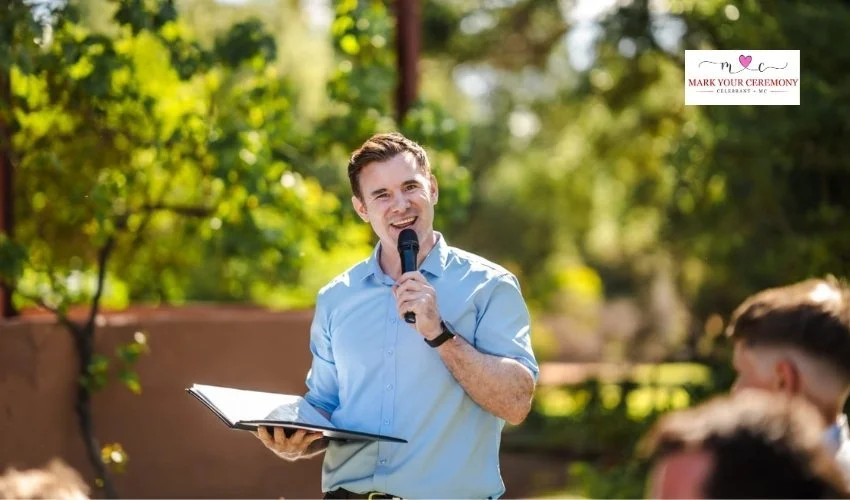
Before the wedding, a marriage celebrant handles legal paperwork, verifies identities, conducts planning meetings, helps create the ceremony structure, and ensures all legal requirements are met well in advance of the wedding day.
1. Lodging the Notice of Intended Marriage (NOIM)
This is the starting point for any legal marriage in Australia. A celebrant must lodge a Notice of Intended Marriage (NOIM), a formal legal document, at least one month before the wedding date (and no more than 18 months before).
Your celebrant walks you through completing the NOIM correctly, collects the required supporting documents, and holds it on file. Miss this step, and the marriage can't go ahead legally. It's one of the first things a registered marriage celebrant will raise when you book them.
Recommended Read:Step-by-Step Guide to Submit NOIM in Australia
2. Identity Verification and Legal Checks
Before the ceremony, your celebrant is legally required to verify the identity of both parties. This typically means reviewing original birth certificates, passports, or other approved identity documents.
If either person has been married before, proof of divorce or a death certificate must also be sighted and recorded. These checks aren't bureaucratic box-ticking; they're a legal requirement under the Marriage Act 1961.
3. Planning Meetings and Relationships Story Gathering
This is where the personalisation begins. Most celebrants schedule two or three planning sessions with couples, either in person or via video call. They ask about how you met, your relationship milestones, what matters most to you, and what kind of atmosphere you want on the day.
The answers become the foundation of your ceremony script.
4. Writing and Personalising the Ceremony Script
A genuine wedding celebrant doesn't hand you a generic template. They write a ceremony script specifically for you, one that includes your story, your values, your humour (if that's your thing), and your vision for the day.
This also includes helping you write your personal vows, suggesting readings, and advising on the order of events. They'll share a draft with you for feedback and refine it until it feels right.
Rehearsal planning also happens at this stage. Not every couple opts for a rehearsal, but for larger weddings or more complex ceremonies, a walkthrough with the celebrant is worth doing.
What Does a Marriage Celebrant Do During the Wedding Ceremony?
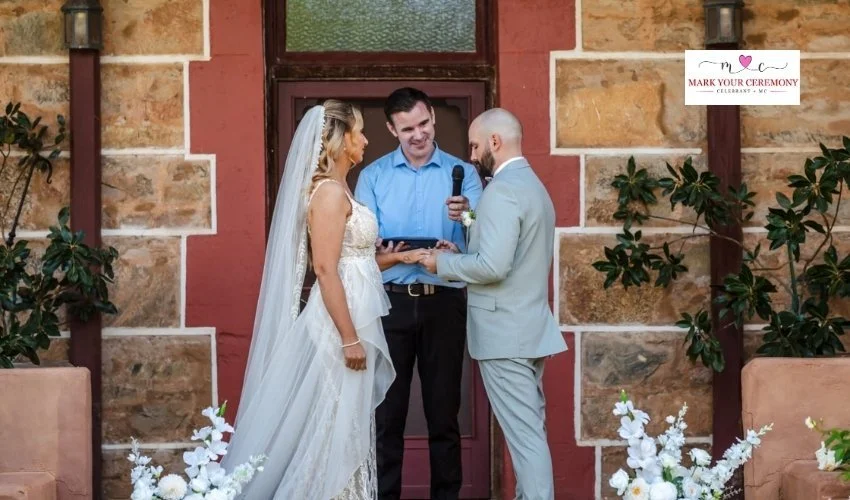
During the ceremony, the celebrant leads the entire event, delivering the ceremony script, guiding vows and legal declarations, managing the flow, coordinating witnesses, and ensuring the marriage is legally valid.
1. Welcoming Guests and Setting the Tone
Your celebrant is the first voice your guests hear. They open the ceremony, acknowledge the significance of the moment, and set the tone, whether that's warm and intimate, light-hearted and fun, or formal and traditional.
They're also managing the room: pacing the ceremony, adjusting for nerves, keeping things moving if needed, and making sure both you and your guests feel at ease.
2. Guiding Vows, Rings, and Legal Declarations
Two specific legal declarations must be spoken aloud during every Australian marriage ceremony:
The Monitum: a statement acknowledging the legal meaning of marriage in Australia
The Vows: in a prescribed legal form, even if personal vows are added around them
Your celebrant guides you through both, word by word, so there's no stumbling or second-guessing. The ring exchange and any other rituals (unity candle, handfasting, or sand ceremony) are also woven in at this point.
3. Managing Witnesses and Marriage Documents
Two witnesses, aged 18 or older, must sign the marriage documents during the ceremony. Your celebrant is responsible for coordinating this, making sure the right people sign at the right time, and that all three copies of the Marriage Certificate (Form 15) are completed correctly.
One copy goes to the couple, one to the celebrant for lodgement, and one is retained as a backup. Getting this wrong creates legal headaches, so your celebrant manages it carefully.
What Does a Marriage Celebrant Do After the Wedding?
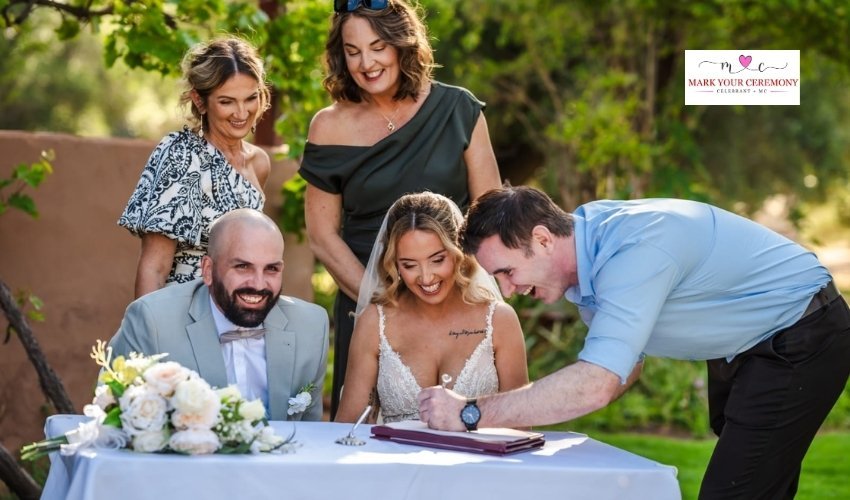
After the ceremony, the celebrant submits the legal marriage documents to the relevant state or territory registry, finalises all records, and provides guidance on obtaining an official marriage certificate for legal use.
1. Registering the Marriage
Within a set timeframe (usually 14 days in most Australian states), your celebrant must lodge the signed marriage documents with the relevant registry in Western Australia; that's the Registry of Births, Deaths and Marriages.
This is what makes your marriage legally recognised. Until the documents are lodged and processed, the ceremony has happened, but the marriage isn't formally on record.
Recommended Read:Legal Documents Required for Marriage in Australia (Complete Guide)
2. Obtaining an Official Marriage Certificate
The certificate you sign at the ceremony is a commemorative copy; it's not the document you use for legal purposes like changing your name or updating a passport.
Your celebrant will explain how to apply for an official Extract of an Entry in a Register of Marriages (the legal certificate) from the relevant state registry. In WA, this is done through the Department of Justice.
If you're getting married in Perth, Mark Your Ceremony offers personalised, legally thorough service, from the first NOIM meeting to the moment the documents are lodged. Explore our wedding packages.
Marriage Celebrant Creates a Personalised Wedding Ceremony
Marriage celebrants help couples create unique ceremonies by weaving in personal stories, custom vows, family traditions, cultural elements, and meaningful rituals, making the ceremony a genuine reflection of the relationship, not a generic script.
1. Writing Personal Vows
A lot of couples want to write their own vows but have no idea where to start. Your celebrant helps with this, offering prompts, examples, structure, and honest feedback.
They'll also advise on length, tone, and how to balance personal vows with the legally required wording. The goal is something that feels authentic, not performed.
2. Including Cultural and Family Traditions
Australian couples come from all kinds of backgrounds. A good marriage celebrant knows how to incorporate cultural customs, whether that's a Chinese tea ceremony acknowledgement, an Indigenous Welcome to Country, a Jewish Sheva Brachot reading, or Irish blessings, without making them feel bolted on.
Family involvement (parent blessings, sibling readings, and children participating) is also something celebrants design into the ceremony structure deliberately.
3. Creating Memorable Ceremony Moments
The best ceremonies have at least one moment the guests talk about for years. That might be an unexpected laugh, a ritual that involves the whole crowd, or a vow that makes everyone cry.
Your celebrant's job is to build that in. They know what works, what falls flat, and how to time it so the emotion lands.
Recommended Read:Top Wedding Planning Tips for Perth Couple
Choose a Marriage Celebrant for Your Wedding Ceremony
Many couples choose a celebrant because they offer something a marriage registrar or religious officiant simply can't: complete flexibility, genuine personalisation, and the freedom to get married wherever and however you want.
Marriage registrars conduct quick, civil ceremonies efficiently but not personal. You get the legal outcome without the story.
Religious officiants are the right choice if your faith is central to your ceremony. But they come with doctrinal requirements that don't suit every couple and venue restrictions that limit your options.
A civil marriage celebrant sits in a different category entirely. They're not bound by a denomination's rules or a registry's time slot. They'll marry you on a beach, in a winery, in your backyard, or on a Tuesday afternoon if that's what works.
Here's what to look for when choosing your celebrant:
Experience: Have they conducted ceremonies similar to what you want? Ask to read sample scripts.
Personality fit: You'll spend several hours with this person. You should actually enjoy talking to them.
Reviews: Look for consistent feedback on communication, ceremony quality, and how couples felt on the day.
Availability: Confirm your date early. Good celebrants in Perth book out months ahead.
What's included: Some celebrants include unlimited meetings, vow coaching, and rehearsal attendance. Others charge extra. Know what you're paying for.
Style: Some celebrants are more formal, others conversational and warm. Listen to their voice in videos or samples before committing.
Recommended Read:How to Choose the Right Marriage Celebrant in Perth
Final Thoughts
A marriage celebrant does far more than show up and speak on your wedding day. They manage the legal process from start to finish, turn your relationship into a ceremony script worth remembering, and make sure everything, from the paperwork to the final vow, happens the way it's supposed to.
The legal side matters. The personal side matters just as much.
Getting both right is what separates a wedding ceremony you'll remember from one you'll simply forget was ever scheduled.
Planning your wedding in Perth? Contact Mark Your Ceremony to discuss your vision, understand your legal requirements, and build a ceremony that actually reflects your story.