
A wedding doesn't have to take place in an expensive venue to feel special. Sometimes, the most meaningful setting is much closer to home: your own backyard, your family garden or a property filled with memories.
A backyard wedding gives you the freedom to create a celebration that reflects your relationship. You can exchange vows beneath a favourite tree, decorate the space with personal touches, and celebrate with the people who matter most. You also have more control over the schedule, styling, and atmosphere.
However, planning a backyard wedding involves more than arranging chairs on the lawn and hanging fairy lights. You'll need to consider the space, guest comfort, weather, catering, facilities, suppliers, and legal marriage requirements.
With thoughtful preparation, you can create a beautiful and memorable wedding without taking on unnecessary stress.
Quick Answer
- Set a realistic budget and guest list before making any arrangements.
- Check whether your backyard has enough space for the ceremony, reception and guests.
- Choose a suitable wedding date and prepare for Australia's changing weather.
- Arrange essential facilities, including seating, toilets, lighting, catering and parking.
- Book reliable suppliers, including an authorised marriage celebrant, photographer and caterer.
- Create a clear timeline for the ceremony, reception, speeches and entertainment.
- Meet Australia's legal requirements, including submitting your NOIM at least one month before the wedding and having two witnesses present.
- Prepare a backup plan, such as a marquee or indoor space, in case of rain or extreme weather.
Planning a wedding in Perth or Western Australia? Explore Mark Your Ceremony's personalised MC services in Perth to see how Mark can help keep your reception organised and enjoyable.
How to Plan a Backyard Wedding in Australia?
The easiest way to plan a backyard wedding is to tackle the important decisions in the right order. Start with your budget and guest list, check whether the property can accommodate your plans, then organise the legal paperwork, suppliers, and final details.
Here are the main steps to follow.
1. Set Your Budget and Guest List
Before choosing decorations or booking suppliers, decide how much you want to spend and approximately how many people you plan to invite.
Your guest list will influence almost every other decision. A celebration for 20 people may only need a few tables, chairs, and a simple catering arrangement. A wedding for 80 guests could require additional seating, a marquee, portable toilets, lighting, and professional catering.
Start by dividing your budget into the main expenses:
Celebrant and ceremony services
Catering and drinks
Tables, chairs, and furniture hire
Marquee or weather protection
Photography and videography
Flowers, decorations, and styling
Music and entertainment
Toilets, lighting, and other facilities
You don't need to have every figure confirmed immediately. An initial budget simply helps you understand what you can afford and where you may need to make adjustments.
Your guest count determines how much space, seating, catering and equipment you'll need. Finalise an approximate number before making major bookings.
Remember that avoiding a traditional venue fee doesn't mean the wedding will be free. You'll still need to arrange many of the services and facilities that a venue would normally provide.
2. Check Whether Your Backyard Is Suitable
Once you have an estimated guest count, take a proper look at the property. Don't just think about how it will look in photographs. Consider how guests will use the space throughout the day.
Picture the ceremony, reception, dining area, and entertainment space.
Will guests have enough room to move comfortably?
Can suppliers access the property easily?
Is there enough space for everyone to sit and enjoy the celebration?
Pay particular attention to:
Space: Allow room for ceremony seating, dining tables, food stations, and entertainment. If the same area will be used for different parts of the wedding, plan how it will be rearranged.
Ground conditions: Check for uneven surfaces, slopes, and areas that collect water. Soft grass can make tables unstable and make walking in heels difficult.
Parking: Consider where guests will leave their cars and where suppliers can unload equipment. Avoid blocking neighbours' driveways or restricting access.
Accessibility: Think about older guests, children, and anyone who may have difficulty walking across grass or uneven ground.
Neighbourhood: Consider nearby homes, noise levels and how late your celebration might continue.
If you're using a family member's or friend's property, get their permission early. Agree on who will organise the setup, manage the cleanup, and take responsibility for any damage.
It's also worth contacting your local council to check whether your plans involve any approvals or restrictions. Requirements can vary depending on the location and the type of event you're organising.
3. Choose the Right Date and Prepare for the Weather
Weather is one of the biggest things to consider when planning an outdoor wedding in Australia. Conditions can vary considerably between states and regions, so choose your date with your local climate in mind.
A sunny afternoon might sound ideal, but excessive heat, strong winds or unexpected rain can quickly make guests uncomfortable.
Here are a few things to prepare for:
Hot weather: Provide shaded seating, fans, and plenty of drinking water. Consider a late-afternoon ceremony to avoid the hottest part of the day.
Rain: Have a covered area, marquee, or suitable indoor alternative ready. Make sure your backup space can accommodate the ceremony and guests comfortably.
Wind: Secure decorations, signage, and lightweight furniture. Speak with your marquee supplier about appropriate anchoring.
Cold weather: If you're planning an evening celebration during cooler months, consider outdoor heaters, blankets and sheltered seating.
You can also read our guide to the best and worst months to get married in Australia to help you choose the best time for your wedding.
Even if the forecast looks promising, arrange a marquee or suitable indoor alternative before the wedding. Last-minute weather changes can be stressful and expensive.
Don't leave your backup plan until the wedding morning. Decide in advance who will make the final weather call and when you'll need to make it.
A practical wet-weather plan gives you peace of mind and helps suppliers prepare for changes without unnecessary last-minute stress.
4. Arrange the Essential Facilities
A traditional wedding venue usually has toilets, lighting, power, and other facilities already available. When hosting a backyard wedding, you'll need to check what the property offers and arrange anything that's missing.
These practical details may not be the most exciting part of planning, but they're essential to keeping guests comfortable.
Power supply: Make a list of everything that needs electricity, including speakers, lighting, catering equipment, and entertainment. Ask suppliers about their power requirements and check whether your home's supply can handle them. If additional power is needed, speak with a qualified electrician or generator supplier.
Toilets and water: One household bathroom may not be enough for a large gathering. Consider hiring portable toilets if necessary. Make sure guests also have easy access to drinking water and handwashing facilities.
Lighting: If your wedding continues after sunset, light the entrances, pathways, seating areas, and toilets. Walk around the property in the evening to identify dark spots.
Waste management: Provide accessible rubbish and recycling bins. Decide who will collect waste and clean the property after the celebration.
Furniture and shelter: Arrange enough tables and chairs for your guest count. Depending on the weather and available space, you may also need a marquee, flooring, or a dedicated dance area.
Provide enough seating, accessible toilets, drinking water, shade and well-lit pathways. Small practical details can make a big difference to everyone's experience.
Planning these facilities early will help you avoid uncomfortable surprises on the day.
For more tips on preparing your outdoor wedding space, check out our outdoor wedding ceremony checklist.
5. Book Your Wedding Suppliers
Once your guest list, budget, and property arrangements are taking shape, start contacting suppliers.
Even though you're hosting your wedding at home, you'll probably still need professional services to bring everything together.
Depending on the size and style of your wedding, you may need some of the following suppliers:
A wedding celebrant
A caterer or food service
A photographer and videographer
A florist or wedding stylist
A DJ, band, or musician
Furniture and marquee hire
A portable toilet provider
A wedding MC
When requesting quotes, give suppliers your wedding date, property address, estimated guest count, and a clear description of what you need.
Don't compare prices alone. Check whether delivery, setup, pack-down, staffing, and equipment are included. Ask about cancellation policies, payment schedules, and what happens if the weather changes.
It's also worth confirming where suppliers can unload their equipment and whether they need access to electricity or water.
Book your key suppliers early, especially if you're planning a wedding during the busy season.
Choosing the Right Celebrant
Your celebrant does more than deliver the legal wording. They help shape the ceremony, guide you through the marriage paperwork, and create an experience that reflects your relationship.
If you're still choosing a celebrant, our guide on questions to ask a wedding celebrant before booking can help you make an informed decision.
Look for an authorised celebrant who listens to your ideas, explains the legal process clearly, and makes you feel comfortable. It's worth discussing your preferred ceremony style, personal vows, readings, and any traditions you'd like to include before making your decision.
For couples in Perth and Western Australia, Mark Your Ceremony offers personalised wedding celebrant services. Mark combines professional ceremony delivery with a relaxed, friendly approach to help couples create a ceremony that feels personal rather than scripted.
6. Organise Your Ceremony and Reception Timeline
A backyard wedding may feel more relaxed than a traditional venue celebration, but it still needs a clear schedule.
Without a venue coordinator, different parts of the event can easily become disorganised. Guests may not know where to go, catering could be delayed or speeches might interrupt the flow of the evening.
It's also helpful to understand how long a wedding ceremony typically lasts in Australia when preparing your schedule.
Create a simple timeline that covers:
Guest arrival and seating
Wedding ceremony
Congratulations and photographs
Drinks and canapés
Reception entrance
Dinner service
Speeches and important announcements
Cake cutting
First dance and entertainment
Share the schedule with your celebrant, MC, and main suppliers before the wedding. Make sure everyone understands when their responsibilities begin.
Why an experienced MC makes a difference
An MC does more than introduce speakers or announce the next part of the evening. They help manage the reception timeline, coordinate important moments and make sure guests know what's happening.
If you're unsure what level of hosting you need, read our guide to MC services for small and large weddings.
This can be especially useful at a backyard wedding, where there may not be a venue coordinator or dedicated event team.
Mark Fay from Mark Your Ceremony brings a background in teaching and international tour guiding to his work as a wedding celebrant and MC. Having led groups across different countries and travelled to every continent, including Antarctica, Mark has developed strong communication and public-speaking skills.
Those experiences are relevant to hosting a wedding reception. An MC needs to read the room, communicate confidently and adapt when the schedule changes. These skills help keep the evening organised without making it feel overly formal.
Let someone else manage the reception timeline.
An MC can coordinate speeches, announcements, dinner and entertainment, so you can spend less time organising guests and more time enjoying your celebration.
How Much Does a Backyard Wedding Cost in Australia?
There isn't one fixed price for a backyard wedding in Australia. Your total cost depends on the number of guests, location, property facilities, catering choices and how much of the planning you handle yourself.
A small celebration at a well-equipped family home may require relatively little additional equipment. A larger wedding with professional catering, a marquee, furniture hire, and portable bathrooms can involve considerably more expense.
The best way to estimate your budget is to list everything you'll need and request itemised quotes.
Here are the main expenses to consider:
These are planning categories rather than fixed prices. Actual quotes will depend on your location, guest numbers, supplier availability and the services included.
Your celebrant and MC are also important parts of your wedding budget. If you're planning a backyard wedding in Perth or Western Australia, Mark Your Ceremony offers personalised celebrant and MC services to make your ceremony meaningful and your reception run smoothly. Whether you need a celebrant, an MC, or both, get in touch with Mark to discuss your wedding plans and request a personalised estimate based on your requirements.
How to Keep Your Backyard Wedding Budget Under Control
If you're trying to keep costs manageable, focus on the things that matter most to you as a couple.
You could:
Keep your guest list small to reduce catering and furniture costs.
Use existing garden features instead of hiring elaborate decorations.
Borrow suitable tables, chairs, or styling items from family and friends.
Choose a simple menu that suits your celebration.
Prioritise professional photography and ceremony services over unnecessary extras.
Compare itemised supplier quotes before making bookings.
Keep some money aside for unexpected expenses.availability,
Borrow suitable decorations, use existing garden features and keep your styling simple. Save more of your budget for the services and experiences you'll remember.
One option worth considering is combining your celebrant and MC services. Instead of coordinating two separate professionals, you can have one person involved in both the ceremony and reception.
This can make communication easier because your celebrant already knows your story, your preferred atmosphere, and the important people involved in your wedding.
Backyard Wedding Planning Checklist
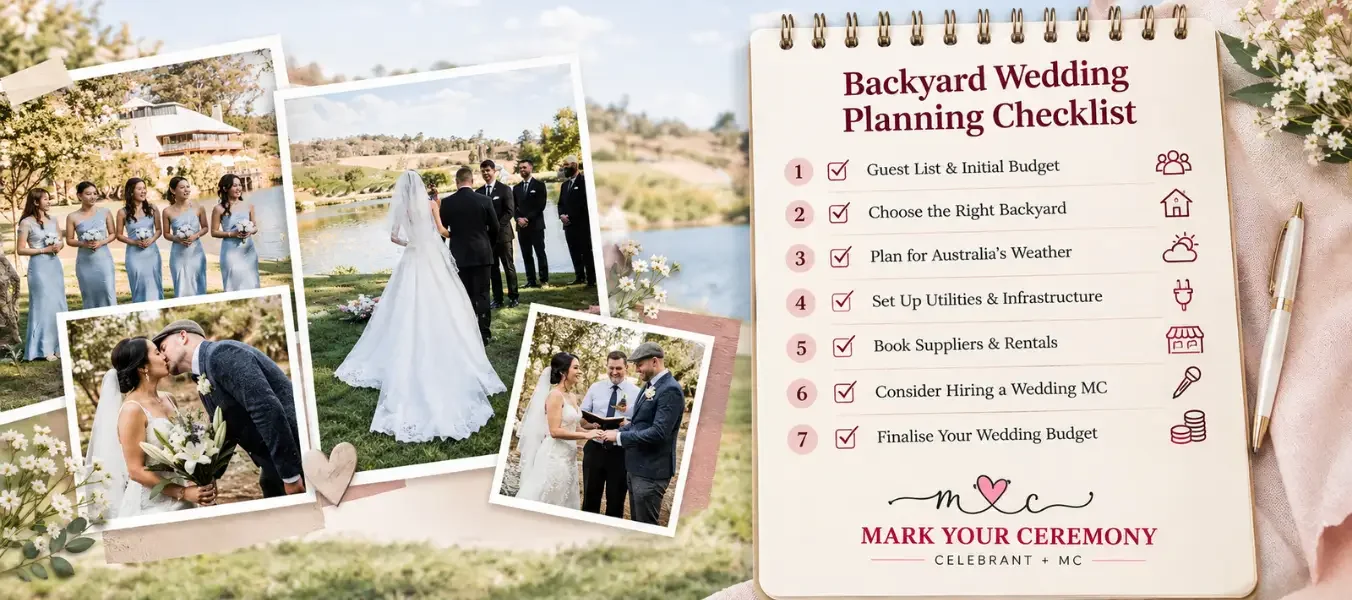
Planning a backyard wedding involves many details, and it's easy to overlook something along the way. Use this quick checklist to keep your preparations organised:
Set your budget and estimate your guest numbers.
Check the backyard space, access and available facilities.
Choose your wedding date and prepare a weather backup plan.
Book your celebrant, caterer, photographer, and other suppliers.
Organise your ceremony and reception timeline.
Confirm your legal paperwork and two witnesses.
Finalise decorations, setup, and cleanup arrangements.
Keep this checklist handy and review it as your wedding day approaches to make sure everything is organised.
Should You Have a Backyard Wedding?
A backyard wedding isn't just an alternative to a traditional venue. For many couples, it's a chance to celebrate somewhere familiar, meaningful, and comfortable.
Here are some of the reasons couples choose to get married at home or on a family property.
1. You Can Have More Control Over Your Budget
One of the biggest advantages of a backyard wedding is that you may avoid paying for a traditional wedding venue.
Instead, you can decide how much to spend on catering, decorations, entertainment, and other services. You might choose a simple garden ceremony followed by a relaxed lunch or invest more in a beautifully styled reception.
Just remember to account for the facilities a venue would normally provide. Furniture, lighting, toilets, and weather protection can add to your overall budget.
2. You Can Personalise Every Detail
A backyard gives you the freedom to create a wedding that reflects your relationship.
You could exchange vows beneath a tree, use flowers from the garden, display family photographs or decorate tables with meaningful keepsakes. You can also involve friends and family in the ceremony if that's important to you.
Your ceremony can be just as personal. An experienced celebrant can help you incorporate meaningful readings, music, personal vows and traditions while ensuring the legal requirements are met.
For more inspiration, explore these unique wedding ceremony ideas in Australia.
Mark's approach at Mark Your Ceremony focuses on creating personalised ceremonies rather than relying on a one-size-fits-all script. That flexibility can be valuable when you want your backyard wedding to feel genuinely connected to your story.
3. The Celebration Can Feel More Relaxed
A familiar setting can make a wedding feel more like a gathering of loved ones than a formal event.
Guests may feel more comfortable, and you can create a schedule that suits the atmosphere you want. Perhaps you'd prefer a morning ceremony followed by a long lunch, or an afternoon celebration that continues into the evening.
You have more freedom over the pace of the day, provided you consider your guests' comfort and any local noise restrictions.
4. You Can Choose a Guest List That Suits the Space
A backyard wedding can work particularly well for couples who prefer an intimate celebration.
You might invite only your closest family and friends, or host a larger gathering if the property has enough space. The important thing is to choose a guest count that the property can comfortably accommodate.
Consider seating, parking, toilets, access, and room to move before sending invitations.
5. You Can Celebrate Somewhere Meaningful
Perhaps it's the home where you grew up, your parents' garden, or a family property you've visited for years.
Choosing a familiar location can add an emotional connection to your wedding day. Instead of simply hiring a beautiful space, you're celebrating in a place that already has a story.
For some couples, that personal connection is more important than having a traditional wedding venue.
Legal Requirements for a Backyard Wedding in Australia
Yes, you can legally get married in a backyard in Australia. You don't need to book a traditional wedding venue, but you must meet the legal requirements under Australian marriage law.
Before your wedding, make sure you understand the following steps.
1. Book an Authorised Marriage Celebrant
An authorised marriage celebrant must conduct your legal marriage ceremony.
Your celebrant will explain the legal process, help you prepare the required documents and make sure the ceremony includes the legally required wording.
You can learn more about what a marriage celebrant does at a wedding before choosing the right professional for your ceremony.
A friend or family member can lead a personal ceremony, but they cannot legally marry you unless they're authorised to solemnise marriages in Australia.
As a Commonwealth-registered marriage celebrant, Mark Fay of Mark Your Ceremony can guide couples through the legal process, from the required paperwork to the ceremony itself. His website also outlines the legal steps and documents couples need to prepare.
2. Submit Your Notice of Intended Marriage
You must give your authorised celebrant a completed Notice of Intended Marriage (NOIM).
The notice must generally be given at least one month and no more than 18 months before your wedding date.
For more information, follow our step-by-step guide to submitting a NOIM in Australia.
If you're unsure about the documents or identification you'll need, speak with your celebrant as early as possible. This gives you enough time to organise everything before the ceremony.
Legal reminder: Don't leave your marriage paperwork until the last minute.
Your Notice of Intended Marriage (NOIM) must generally be given to your authorised celebrant at least one month and no more than 18 months before your wedding.
3. Have Two Witnesses Present
Your wedding ceremony must include two witnesses who are both at least 18 years old. They must be present during the ceremony and sign the marriage documents afterwards.
Make sure you choose two people who can attend on the day. It's also a good idea to have a backup in case someone becomes unavailable. If you're unsure about the rules, our guide to wedding witness requirements in Australia explains who can act as a witness and what they need to do.
4. Include the Legally Required Ceremony Wording
You can personalise your backyard wedding ceremony with your own vows, readings, music and traditions.
However, the ceremony must still include the legal wording required under Australian marriage law. Your celebrant can explain which parts are compulsory and where you have flexibility.
5. Check Property Permission and Local Council Requirements
If you're getting married at someone else's property, make sure you have the owner's permission.
You should also contact your local council to check whether your plans involve restrictions or approvals. Depending on your location and arrangements, these may relate to noise, temporary structures, parking, or food services.
Don't assume that every backyard wedding needs a permit or that none do. Check the requirements that apply to your specific property and event.
Final Thoughts
A backyard wedding gives you the freedom to celebrate your relationship in a setting that feels personal. You can choose the guest list, create your own atmosphere, and build a day around the people and details that matter most.
The key is to plan beyond the decorations. Think about the space, weather, guest facilities, suppliers, legal requirements and how the ceremony will flow into the reception.
And remember, you don't have to manage every part of the day yourself.
If you're planning a backyard wedding in Perth or Western Australia, Mark Your Ceremony can help make the occasion personal, relaxed, and enjoyable.
Led by Mark Fay, an experienced marriage celebrant and MC, the business combines personalised ceremonies with professional reception hosting. Mark's background in teaching and international tour guiding, along with his experience officiating weddings, brings a strong focus on communication, organisation, and making guests feel comfortable.
Make your wedding feel like yours, from the first "I do" to the last dance.
Frequently Asked Questions (FAQs)
-
Yes. You can legally get married at a private residence in Australia, provided the location is lawful and you meet the legal marriage requirements. You'll need an authorised marriage celebrant and two witnesses aged 18 or over.
-
There is no standard price. Costs depend on guest numbers, catering, furniture, marquees, bathrooms, photography and other suppliers. A small, simple celebration can require far less infrastructure than a large backyard reception.
-
Not necessarily. A private wedding at a residential property may not require a specific wedding permit. However, local council requirements can apply to matters such as noise, temporary structures, parking and food services. Contact your council before making arrangements.
-
There is no universal guest limit for backyard weddings. It depends on the property's size, available facilities, safe access and any applicable local requirements.
-
Yes, if you want to legally marry in Australia, an authorised marriage celebrant such as Mark Fay, must solemnise your marriage. A friend or family member can lead a symbolic ceremony, but they cannot legally marry you unless they're authorised.
-
It depends on where you're getting married. In Perth and much of southern Western Australia, spring and autumn can offer comfortable conditions for outdoor celebrations. However, you should consider local temperatures, rainfall, wind and daylight before choosing your date.
-
A friend can lead a personal or symbolic ceremony, but they cannot legally solemnise your marriage unless they're an authorised marriage celebrant. You can discuss having a friend conduct the personal part of the ceremony while an authorised celebrant handles the legal requirements.
-
An MC can be very helpful, especially if you're hosting a reception with speeches, dinner, entertainment and other planned moments. They can welcome guests, make announcements and keep the event moving, allowing you and your family to enjoy the celebration.