Civil vs Religious Wedding Ceremony in Australia: What's the Difference?
The main difference between a civil vs religious wedding ceremony comes down to three things: who is legally allowed to marry you, where the ceremony can take place, and how much creative control you have over the script. Around 83% of Australian couples now choose a civil ceremony, according to the Australian Institute of Family Studies, using the latest Australian Bureau of Statistics data, but the right choice still depends on your beliefs, your family, and the kind of day you want.
This guide breaks down exactly how the two compare, from who's legally allowed to officiate through to venue rules, cost, and how much of the ceremony you actually get to write yourself. By the end, you'll know exactly what questions to ask when you sit down with a celebrant for the first time and which option fits the wedding you're picturing.
Civil vs Religious Wedding Ceremony at a Glance
Civil vs Religious Wedding Ceremony: What Each One Actually Means
Before comparing specifics like venue rules or cost, it helps to understand what each ceremony type actually is at its core. Civil and religious ceremonies differ in who's allowed to officiate, where the wedding can be held, and how much of the script and structure the couple gets to shape themselves. Here's what sets them apart.
What Is a Civil Ceremony?
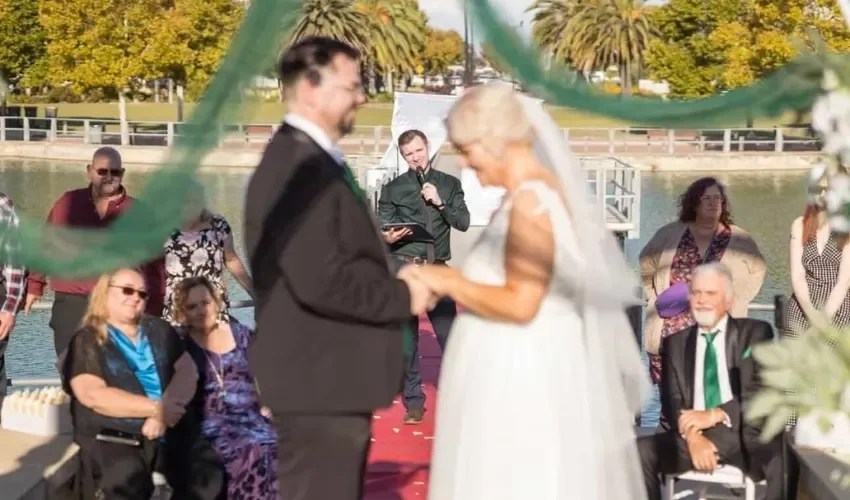
A civil ceremony is a non-religious, legally binding wedding conducted bya wedding celebrant registered with the Attorney-General's Department under the Marriage Act 1961. It contains no compulsory religious content. Couples can hold it virtually anywhere, from a beach at sunrise to a backyard with twenty guests, and shape almost everything about the script, order of events and rituals themselves.
The only fixed legal requirements are the monitum (a short statement explaining what marriage means under Australian law) and the couple's vows, which must include a specific legal form of words. Everything else, from readings to music to unity rituals like a sand ceremony or handfasting, is up to the couple.
What Is a Religious Ceremony?
A religious ceremony is officiated by a minister of religion from a recognised denomination and follows that faith's rites, whether that's a Catholic Nuptial Mass, a Jewish ceremony under the chuppah, or an Islamic Nikah. These ceremonies are usually held in a house of worship and follow a structure set largely by religious doctrine rather than by the couple.
Religious officiants answer to their religious institution rather than to a government code of conduct, and the ceremony itself often carries deep spiritual meaning tied to the couple's faith and community.
Whichever ceremony feels right for you, Mark Your Ceremony can help bring it to life. See the packages and find the right fit for your day.
Types of Marriage Celebrants in Australia
To really understand the civil celebrant vs religious celebrant distinction, it helps to know who is legally allowed to stand at the front and marry you in the first place. Under the Marriage Act 1961, everyone authorised to solemnise a marriage in Australia is called a celebrant, but the law splits them into four subdivisions.
Ministers of religion (Subdivision A): appointed by a recognised religious denomination, not the government. They set their own rules for what happens in the ceremony, provided their denomination approves.
State and territory officers (Subdivision B): government employees who conduct registry-style civil ceremonies.
Marriage celebrants (Subdivision C): independent civil celebrants who complete a Certificate IV in Celebrancy, pay an annual registration fee, and complete ongoing professional development. This is the type of celebrant most Australians picture when they think of "civil celebrant".
Religious marriage celebrants (Subdivision D): a smaller category introduced after the 2017 marriage equality changes, covering ministers from non-recognised denominations and celebrants with a registered religious objection.
A civil celebrant can shape a ceremony around a couple's own story, values and beliefs, whether that includes some religious content, none at all, or a mix of cultural traditions. A religious minister works within the doctrine of their faith and generally cannot deviate from it, regardless of what the couple would prefer.
Recommended Read: Difference between a celebrant and a religious officiant
Civil vs Religious Wedding Ceremony: 4 Key Differences
When you compare a marriage celebrant vs a religious minister and the ceremonies each one leads, five differences stand out.
1. Venue Rules
Civil ceremonies can happen almost anywhere, subject to a permit if it's on public land. Religious ceremonies are typically confined to a church, mosque, synagogue or other consecrated space, which limits venue choice but adds to the occasion's spiritual weight for many couples.
3. Personalisation
This is usually the deciding factor. A civil marriage ceremony in Australia can include personal vows, poetry, music of your choosing, and rituals drawn from any culture or none at all. Many couples choose to start by writing their own wedding vows, which is one of the clearest ways a civil ceremony can be shaped around you. A religious ceremony follows a largely fixed order of service, prayers, hymns and readings set by the faith, with limited room for the couple to change the content.
4. Length and Structure
Religious ceremonies tend to run longer, often 30 to 60 minutes or more, because they may include communion, hymns, a sermon and specific liturgy. Civil ceremonies can be as short as five minutes or extended to suit the couple, since there's no fixed liturgy to work through.
Recommended Read: How long a wedding ceremony typically lasts in Australia
5. Who the Celebrant Answers To
A civil celebrant is bound by a code of conduct enforced by the Attorney-General's Department. A religious minister answers primarily to their church, mosque, synagogue or religious leadership, not to a government regulator.
The Legal Paperwork: Same for Both Ceremony Types
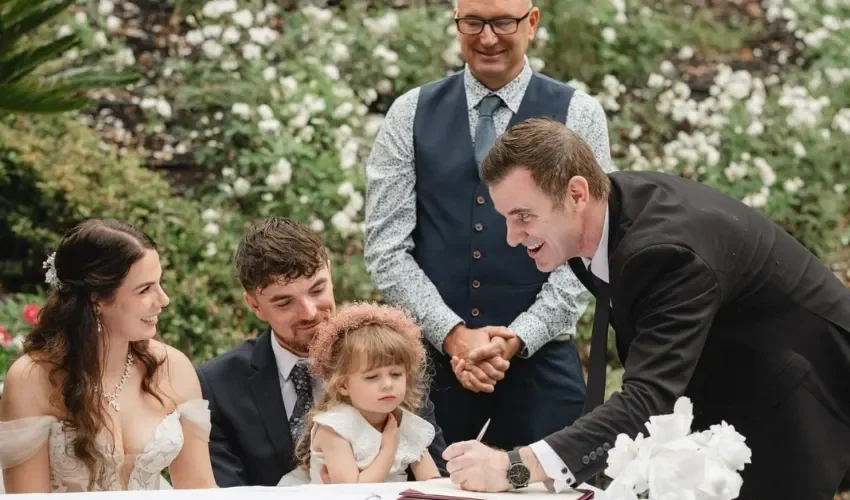
Every other section on this page compares how civil and religious ceremonies differ, but the legal paperwork is one area where they're exactly the same. Whichever ceremony you choose, you'll need:
Notice of Intended Marriage (NOIM): lodged with your celebrant at least one calendar month before the wedding date, required under the Marriage Act 1961.
Two witnesses: both must be over the age of 18 and present at the signing
An authorised celebrant: civil or religious, both are equally recognised under the Marriage Act
A marriage certificate: identical in legal standing regardless of which ceremony type you choose
Your celebrant will guide you through the paperwork itself, but it's worth starting the NOIM conversation early, since the one-month minimum catches out a lot of couples planning a shorter engagement.
Recommended Read: Step-by-step guide to submitting your NOIM
Civil vs Religious Ceremony: Cost Considerations
Cost isn't usually the deciding factor between a civil vs religious wedding ceremony, but it does shift the budget conversation in a few ways.
Neither option is inherently cheaper across the board. It comes down to venue choice, guest numbers, and how much personalisation the couple wants.
Want an accurate quote for your ceremony? Contact Mark Your Ceremony for a package that fits your guest list, venue and budget.
Benefits of a Civil vs Religious Wedding Ceremony
Both ceremony types come with real advantages, depending on what matters most to you as a couple.
Benefits of a Civil Ceremony
A civil ceremony gives couples the most freedom to shape their wedding around themselves rather than a set tradition. Here's what stands out:
Full personalisation: write your own vows, choose any readings, and shape the entire structure around your own story
Venue freedom: hold the ceremony anywhere, from a beach to a backyard to a private estate, without being tied to a place of worship
Faster planning: typically requires less lead-up time, with no pre-marriage counselling or religious classes required
Inclusive of interfaith and non-religious couples: a civil celebrant can blend traditions from different cultures or faiths within one ceremony
Equal legal standing: carries the same legal weight under the Marriage Act 1961 as a religious ceremony
Benefits of a Religious Ceremony
A religious ceremony offers something different: a sense of tradition, faith and community that many couples find deeply meaningful. Here's what stands out:
Spiritual depth and tradition: carries the weight of established rites, prayers and rituals passed down through generations
Community and family connection: often takes place within the couple's existing faith community, surrounded by shared beliefs and support
A clear, guided structure: the order of service is largely set by the faith, which can simplify decision-making for couples who don't want to plan every detail themselves
Meaningful setting: held in a church, mosque, synagogue or other place of worship that may already hold personal or family significance
Equal legal standing: carries the same legal weight under the Marriage Act 1961 as a civil ceremony
Civil vs Religious Ceremony: Which Should You Choose?
There's no universally right answer here, but a few questions tend to make the decision easier:
Do you or your partner have strong ties to a specific faith or religious community?
Is your venue a beach, garden, vineyard or backyard rather than a place of worship?
Do you want to write your own vows and choose your own readings and rituals?
Are you and your partner from different faiths, or does one of you hold no religious beliefs?
Do family expectations around a traditional church wedding matter to you?
If your answers lean towards flexibility, personalisation and a non-traditional venue, a civil ceremony is likely the better fit. If faith, tradition and a house of worship matter deeply to you and your family, a religious ceremony may carry more meaning.
It's also worth knowing that the two aren't always mutually exclusive. Many civil celebrants are happy to include a reading from scripture, a family member saying a prayer, or a hymn as processional music, so couples can often find a middle ground without committing to a fully religious service
Final Thoughts
Choosing between a civil vs religious wedding ceremony really comes down to what matters most to you and your partner: legal flexibility and full personalisation, or faith, tradition and community. Neither option is more "official" than the other; both carry equal legal standing under the Marriage Act 1961, and both can result in exactly the wedding day you've pictured, as long as you go in knowing what each path actually involves.
If you're still weighing it up, talk it through with a celebrant early. A good celebrant will walk you through your options honestly, rather than pushing you towards whatever suits them, and help you land on a ceremony that feels right for both of you.
Ready to start planning your ceremony? Visit Mark Your Ceremony to explore your options and start building a wedding that's personal, legal, and genuinely yours.
Frequently Asked Questions
-
Yes. Both are equally legal under the Marriage Act 1961, and couples receive the same official marriage certificate either way.
-
Yes. Many civil celebrants are happy to include prayers, scripture readings or hymns if that's meaningful to the couple.
-
At least one calendar month before the ceremony date, for both civil and religious weddings.
-
Sometimes, but it depends entirely on the church's own permission. Some allow it; others don't.
-
The monitum is the legal statement of marriage every couple must hear. Civil celebrants must include it, but ministers of religion are exempt.
-
Not inherently. Cost depends more on venue, guest numbers and styling than on whether the ceremony is civil or religious.
-
Yes, in most cases. Civil celebrants can weave in religious readings or blessings, though fully religious ceremonies have less flexibility.
-
Yes. They must complete a Certificate IV in Celebrancy, register with the Attorney-General's Department, and complete ongoing training each year.